

You check your meter. The screen blinks back at you. Maybe it’s a 170 blood sugar reading. Maybe it’s creeping past 200. Your stomach drops a little. You think how to lower blood sugar quickly?
We have all been there. You eat something you thought was safe, or maybe stress got the better of you, and suddenly your numbers are way off.
Here is the truth: most articles will give you a list of “magical” foods like cinnamon or okra water. Those are fine for the long run, but they won’t help you right now. There is no natural pill that drops blood sugar in 5 minutes.
If you are feeling confused, can’t catch your breath, or you’re vomiting, stop reading this and call 911 (or your local emergency number). Those are signs of Diabetic Ketoacidosis (DKA), and you can’t treat that at home.
But if you are feeling okay—just annoyed or worried about that spike—you can manually bring your levels down. It’s not magic; it’s just biology.
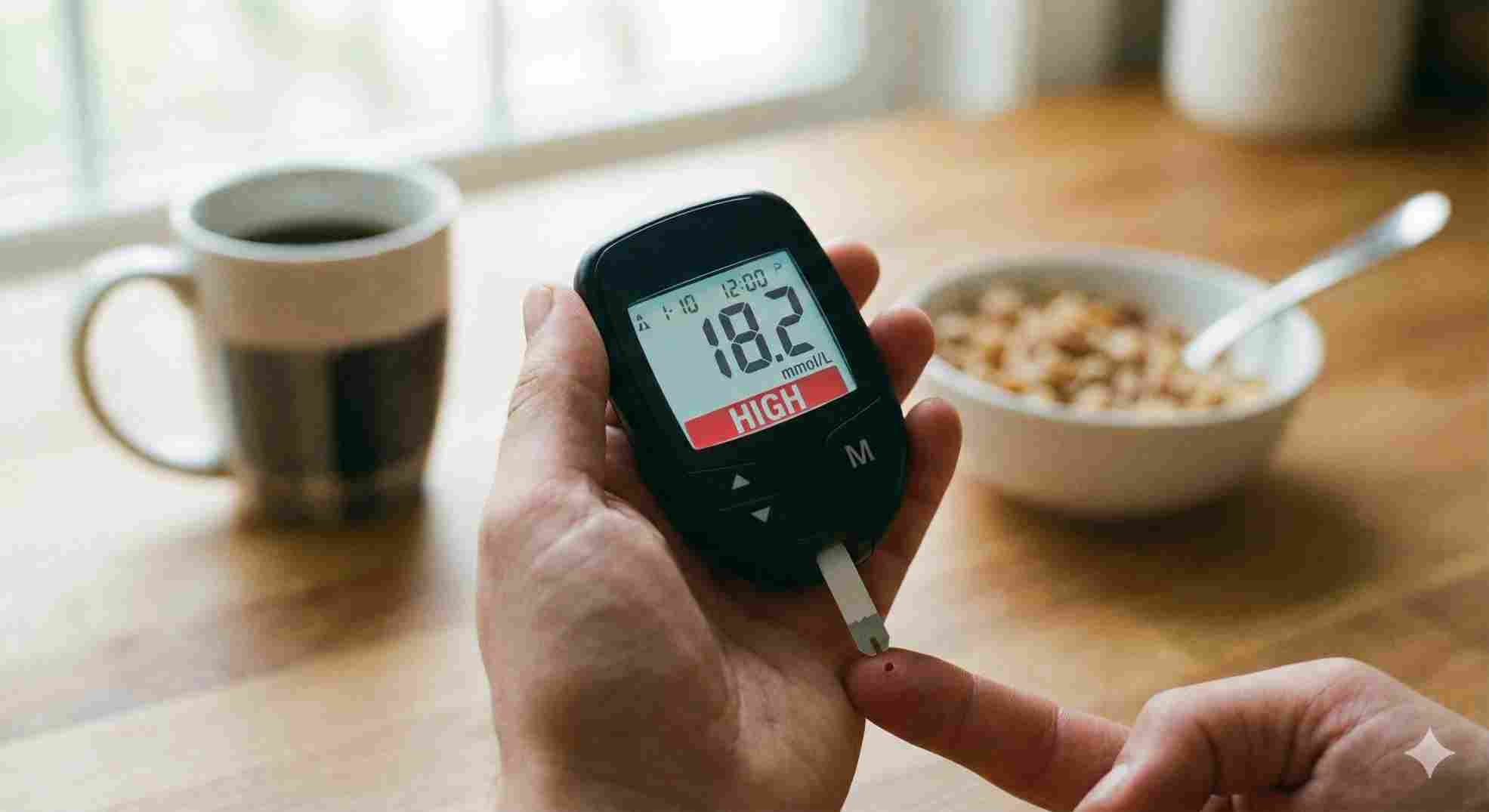
Quick Cheat Sheet
- The Only Instant Fix: Rapid-acting insulin. It takes about 15–30 minutes to start working.
- The Flush: Drinking water helps your kidneys push sugar out through urine.
- The Burn: Walking works wonders, but check for ketones first. If you have ketones, walking can actually make your sugar go up.
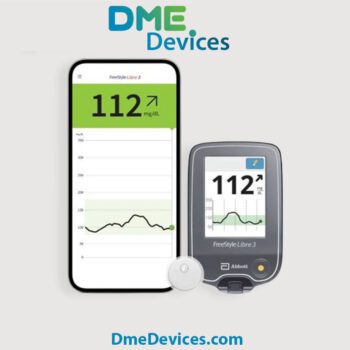
- The Number: A blood sugar level 170 is high if you haven’t eaten, but pretty standard for a diabetic after a big meal. Don’t panic yet.
Part 1: How to Lower Blood Sugar Quickly (Right Now)
You want that number down. Here are the three actual ways to make that happen.
1. The Insulin Correction (If You Have It)
If your doctor gave you rapid-acting insulin (like Humalog or Novolog), this is the time to use it.
- What it does: It basically opens the door for sugar to leave your blood and enter your cells.
- Timing: You’ll see a drop starting in about 15 minutes. It peaks in an hour or two.
- Big Warning: Don’t “rage bolus.” That’s when you take a shot, don’t see the number move fast enough, and take another one. That is how you end up on the floor with low blood sugar an hour later. Trust the first dose.
2. Drink Water (A Lot of It)
Think of your kidneys as a filter. When your sugar is high (usually over 180 mg/dL), your kidneys try to dump the extra glucose into your urine.
- Do this: Drink two big glasses of water right now.
- Why? If you are dehydrated, your blood is thicker, and the sugar concentration stays high. Water thins things out and helps you pee the sugar away.
3. Move Your Body (But Be Careful)
Your muscles need fuel to move. When you walk, they steal glucose from your bloodstream to keep going. They often don’t even need insulin to do this.
- The Move: A steady 15-minute walk. Nothing crazy.
- Why not run? Intense cardio (like sprinting) releases adrenaline. Adrenaline tells your liver to dump more sugar into your blood. Keep it slow and steady.
THE SAFETY CHECK: If you are over 240 mg/dL, pee on a ketone strip first. If it changes color (showing ketones), do not exercise. Exercise breaks down fat, which makes more ketones. That’s dangerous.
Part 2: Is 170 Blood Sugar Actually Bad?
You saw 170 blood sugar on the screen. Is that an emergency?
Honestly? Probably not.
For an adult, 170 mg/dL is high, but it’s not a “rush to the hospital” number unless it stays there for days or you feel sick. Context is everything. A 175 blood sugar reading means something totally different depending on when you last ate.
What Your Number Means
| When did you test? | The Number | What it means | What to do |
|---|---|---|---|
| Morning (Fasting) | 100 – 125 | Prediabetes range | Watch your carbs today. |
| Morning (Fasting) | 126+ | Diabetes range | You need a plan from your doctor. |
| 2 Hours After Meal | Under 140 | Normal | Nothing. You’re good. |
| 2 Hours After Meal | 140 – 199 | Elevated | Drink water, go for a walk. |
| Random Time | 200+ | Likely Diabetes | Call your doctor. |
| Any Time | 250 – 300+ | Danger Zone | Check ketones. Call doctor if you feel sick. |
Note: If you just ate a huge bowl of pasta, seeing a 170 isn’t shocking. If you haven’t eaten in 8 hours and see a 170, that’s a different story.
Part 3: High Blood Sugar Symptoms (How it Feels)
Sometimes you don’t have your meter with you. You have to rely on how your body feels. When glucose turns into sludge in your veins, your body sends out some pretty clear signals.
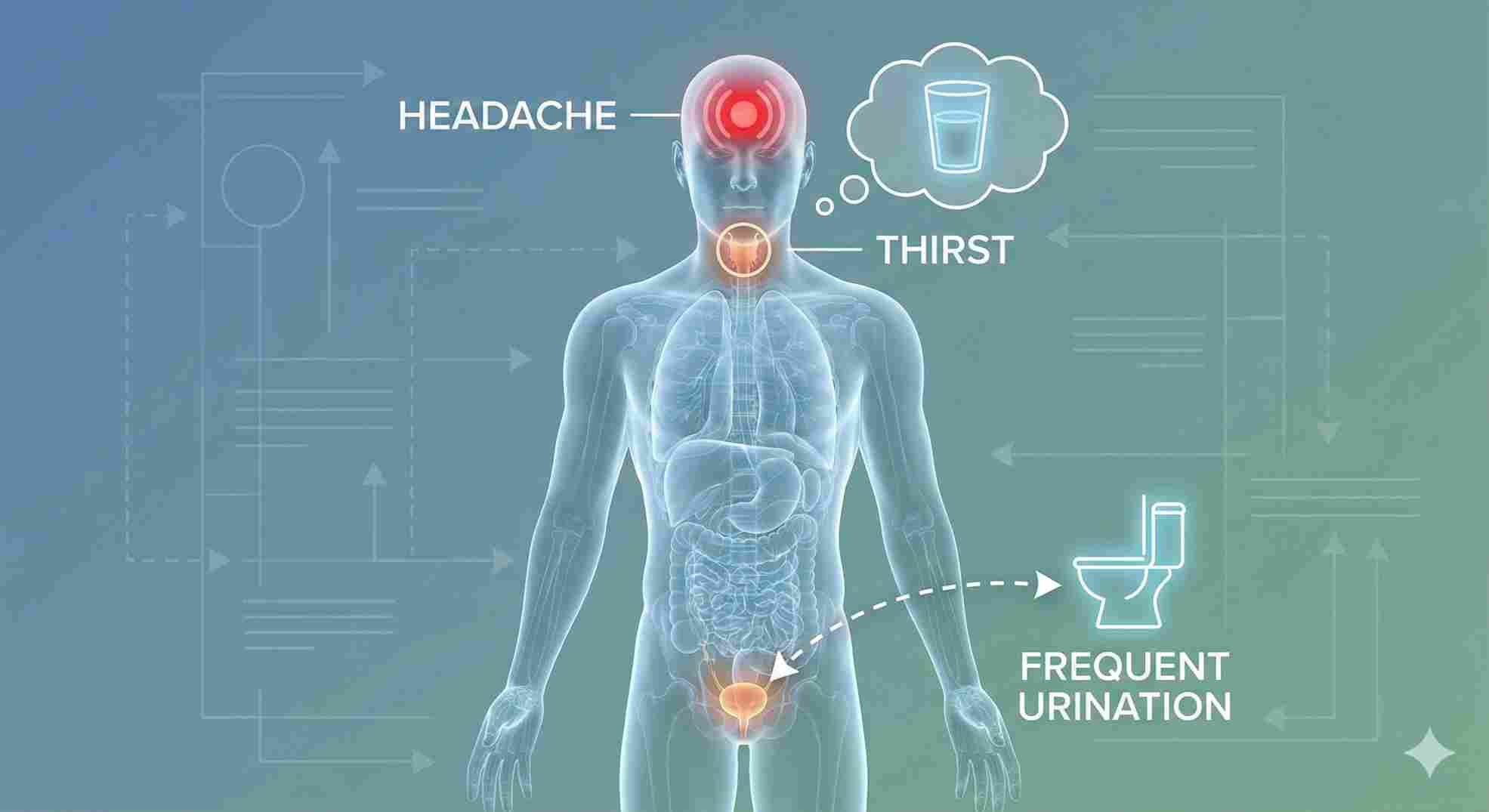
The Big Three Signals
Doctors call these the “Polys,” but here is what they actually look like:
- You treat the toilet like a second home: Your body is trying desperately to pee out the sugar.
- You can’t drink enough water: Because you’re peeing so much, you get dehydrated fast. Your mouth feels like cotton.
- You’re hungry (even if you just ate): Your cells aren’t getting energy because the sugar is stuck in your blood. So your brain screams “EAT MORE,” which is the last thing you need.
Does it feel Mild or Scary?
| Level | Physical Signs | Mental Signs |
|---|---|---|
| Mild High (160–200) | Thirst, dry mouth, maybe a little tired. | Cranky, hard to think straight. |
| Moderate High (200–350) | Blurry eyes, peeing constantly, itchy skin. | Can’t focus, just want to sleep. |
| Severe (DKA Risk) | Throwing up, panting, breath smells like fruit. | Totally confused, might pass out. |
If your breath smells fruity or like nail polish remover, stop what you are doing. That is ketones. You need medical help.
Part 4: Stop the Next Spike Before It Happens
Knowing how to lower blood sugar quickly is great for emergencies. But let’s try to avoid the emergency next time. You don’t have to eat cardboard to fix this; you just have to change the order of things.
The “Naked Carb” Rule
Never eat a carb by itself.
Think of a slice of white bread. It hits your blood like a race car. Now think of that bread with peanut butter. The fat in the peanut butter acts like a speed bump.
- Don’t eat: An apple alone.
- Do eat: An apple with a handful of almonds or a slice of cheese.
The Swap Game
Some foods turn to sugar instantly. Others take their time. This is often referred to as the Glycemic Index.
| Spikes You Fast (High GI) | Steady Energy (Low GI) |
|---|---|
| White Rice | Quinoa or Brown Rice |
| Instant Oatmeal | Rolled or Steel-Cut Oats |
| Watermelon | Berries or Cherries |
| Mashed Potatoes | Sweet Potatoes |
| Soda / Juice | Water with a squeeze of Lemon |
Stress & Sleep (The Secret Culprits)
You can eat perfect salads and still have high blood sugar symptoms. Why? Because of cortisol.
When you are stressed out or you only slept 4 hours, your body dumps sugar into your blood to give you “energy” to fight the stress.
- The fix: Get some sleep. Seriously. 7–8 hours can lower your morning numbers without you doing anything else.
Bottom Line
Seeing a high number is scary. It feels like you failed a test. You didn’t.
If you are staring at a 170 blood sugar reading or higher right now:
- Take a breath. Panic raises your sugar.
- Drink a big glass of water.
- Go for a walk (unless you have ketones).
- Take your meds if you missed them.
You can handle this. If your numbers won’t come down or you feel sick, call your doctor. Don’t wait.
Want to start fresh? Check your number tomorrow morning and try swapping your breakfast toast for eggs. Small steps win this game.












Is a 170 blood sugar level dangerous?
For most people, a blood sugar level 170 isn’t going to put you in the hospital right now, especially if you just ate. But if you wake up with that number every day, it’s doing damage to your body over time. You need to talk to a doctor.
Can drinking hot water lower blood sugar?
Hot or cold, it doesn’t matter. Just drink plain water. It helps your kidneys flush out the sugar. Stay away from juice—that will just make it worse.
How fast does walking work?
Pretty fast. You can start seeing numbers drop in about 15 or 20 minutes. It’s one of the best tools you have.
What if I'm at 175 mg/dL two hours after dinner?
175 blood sugar reading two hours after eating is on the borderline. The American Diabetes Association generally recommends keeping post-meal levels under 180 mg/dL.
Does vinegar actually help?
little bit. Some studies show a spoon of apple cider vinegar before a meal can stop the spike from being so high. But don’t expect it to fix a high number once it’s already there.
Write a comment
Your email address will not be published. All fields are required