
You stare at your blood sugar log, exhausted. You prick your finger twice a day, write down the numbers, and still wonder how to calculate hba1c from all those scattered readings. It is incredibly frustrating to do all this hard work without knowing if your health is actually moving in the right direction.
That is why having reliable medical equipment at your fingertips matters so much right now. A high-quality testing kit or a continuous glucose monitor (CGM) does more than just flash a number on a screen; it provides the raw, accurate data you need to take the guesswork out of your daily routine. When you trust your supplies, you can finally trust your results.
Let’s fix this confusion today. By learning a basic math formula or using a digital blood glucose converter, you can translate your daily logs into a clear, long-term picture of your health. You can do this right from your living room, long before your next doctor’s appointment.
The Quick Fix: Turn Your Daily Average Into an A1c
Here is the secret most people miss: you do not always have to wait three months for a lab draw to know where you stand. If you know your Estimated Average Glucose (eAG)—which is simply the average of your daily readings over the last few weeks—you can figure out your A1c right at your kitchen table.
Medical professionals use a standard, proven formula to make this translation. You take your average daily blood sugar (in mg/dL), add 46.7, and then divide that total by 28.7.
(Average Blood Sugar + 46.7) / 28.7 = Estimated A1c
Let’s look at a real-world example. If your glucose meter shows your daily average is 160 mg/dL:
160 + 46.7 = 206.7
206.7 / 28.7 = 7.2% A1c
Suddenly, those random daily numbers make sense. This quick math gives you an immediate snapshot of your health. It also highlights exactly why using accurate, unexpired test strips from a trusted provider is so vital. Bad strips give bad data, and bad data ruins your calculation.
 Why Knowing How to Calculate HbA1c Matters
Your daily blood sugar reading is just a single snapshot in time. It tells you what is happening in your blood right at that exact second. Eat a heavy meal? The number spikes. Go for a brisk 20-minute walk? The number drops.
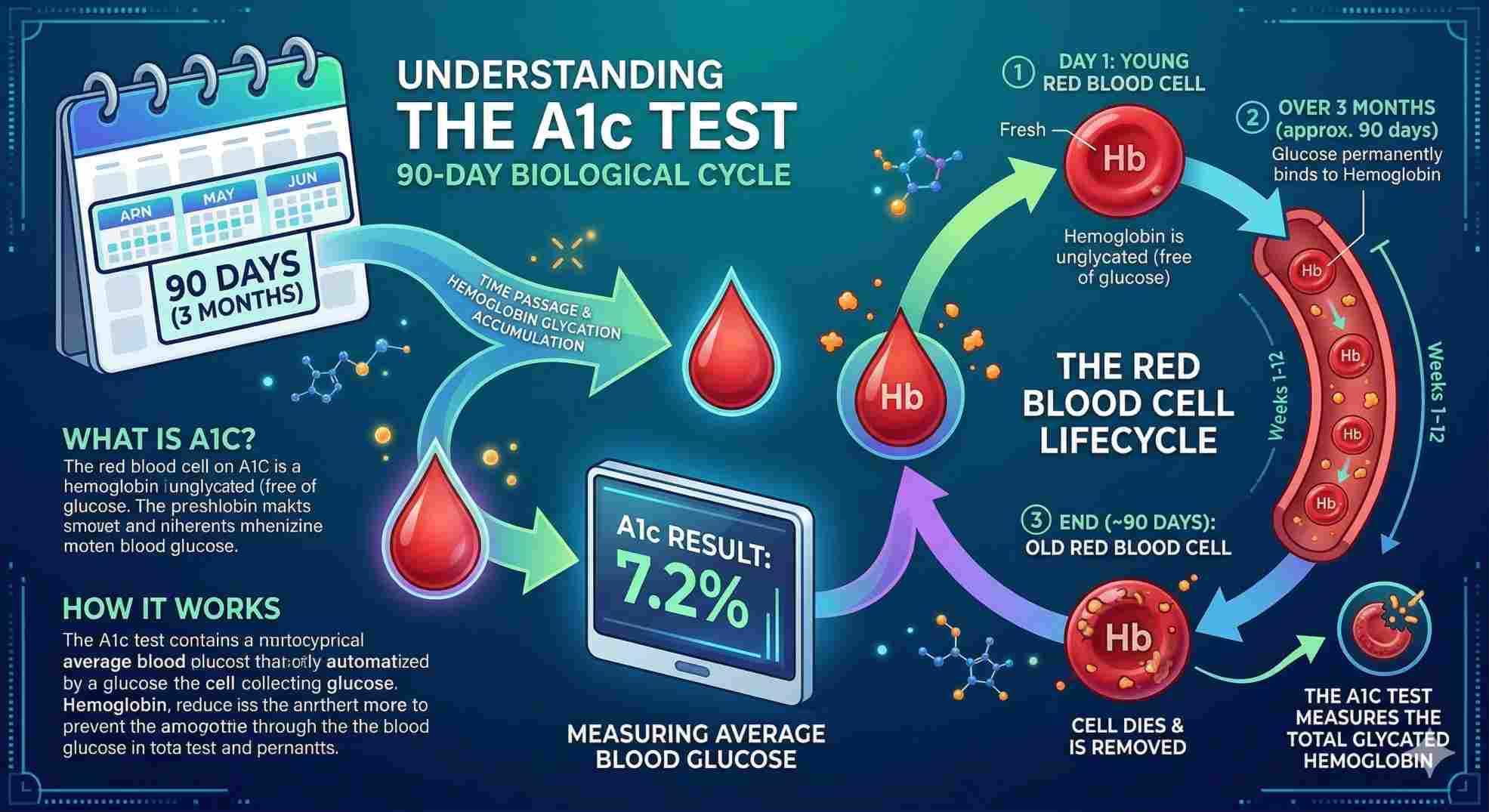
Your HbA1c (Hemoglobin A1c) is a completely different story. It acts like a 90-day video recording. It measures the percentage of your red blood cells that have sugar coated on them. Since red blood cells live for about three months, this test gives your doctor a highly accurate average of your blood sugar control over that entire period.
Figuring out how to calculate hba1c on your own puts you back in the driver’s seat. You do not have to sit around waiting for a doctor to tell you if your new diet, medication, or workout routine is working. You can monitor the trends yourself and adjust your habits in real-time.
The Connection Between Daily Testing and Long-Term Averages
To get a reliable estimate, you need a solid foundation of data. Testing once a week will not cut it. You need consistent, daily readings. This means testing while fasting, before meals, and after meals.
Here is a simple breakdown of how your daily estimated average glucose (eAG) lines up with your A1c percentage.
HbA1c to Estimated Average Glucose (eAG) Conversion Table
| HbA1c Percentage (%) | Estimated Average Glucose (mg/dL) | Estimated Average Glucose (mmol/L) |
|---|---|---|
| 5.0% | 97 mg/dL | 5.4 mmol/L |
| 6.0% | 126 mg/dL | 7.0 mmol/L |
| 7.0% | 154 mg/dL | 8.6 mmol/L |
| 8.0% | 183 mg/dL | 10.2 mmol/L |
| 9.0% | 212 mg/dL | 11.8 mmol/L |
| 10.0% | 240 mg/dL | 13.3 mmol/L |
| 11.0% | 269 mg/dL | 14.9 mmol/L |
| 12.0% | 298 mg/dL | 16.5 mmol/L |
 Hba1c Conversion to Blood Sugar: Making Sense of Your Monitor
I talk to customers all the time who are just flat-out confused. They look at their continuous glucose monitor, see an average of 140 mg/dL, and panic. They don’t know if that is a good number or a dangerous one.
This is where hba1c conversion to blood sugar becomes your best tool. When your physician tells you to aim for an A1c under 7.0%, they are actually asking you to keep your daily blood sugar average right around 154 mg/dL.
If you live outside the United States, your meter probably reads in mmol/L instead of mg/dL. The math changes slightly, but the end goal is exactly the same. A reliable blood glucose converter tool handles both measurements easily, ensuring you always know where your health stands regardless of the specific device you use.
At-Home Testing vs. Clinical Lab Results
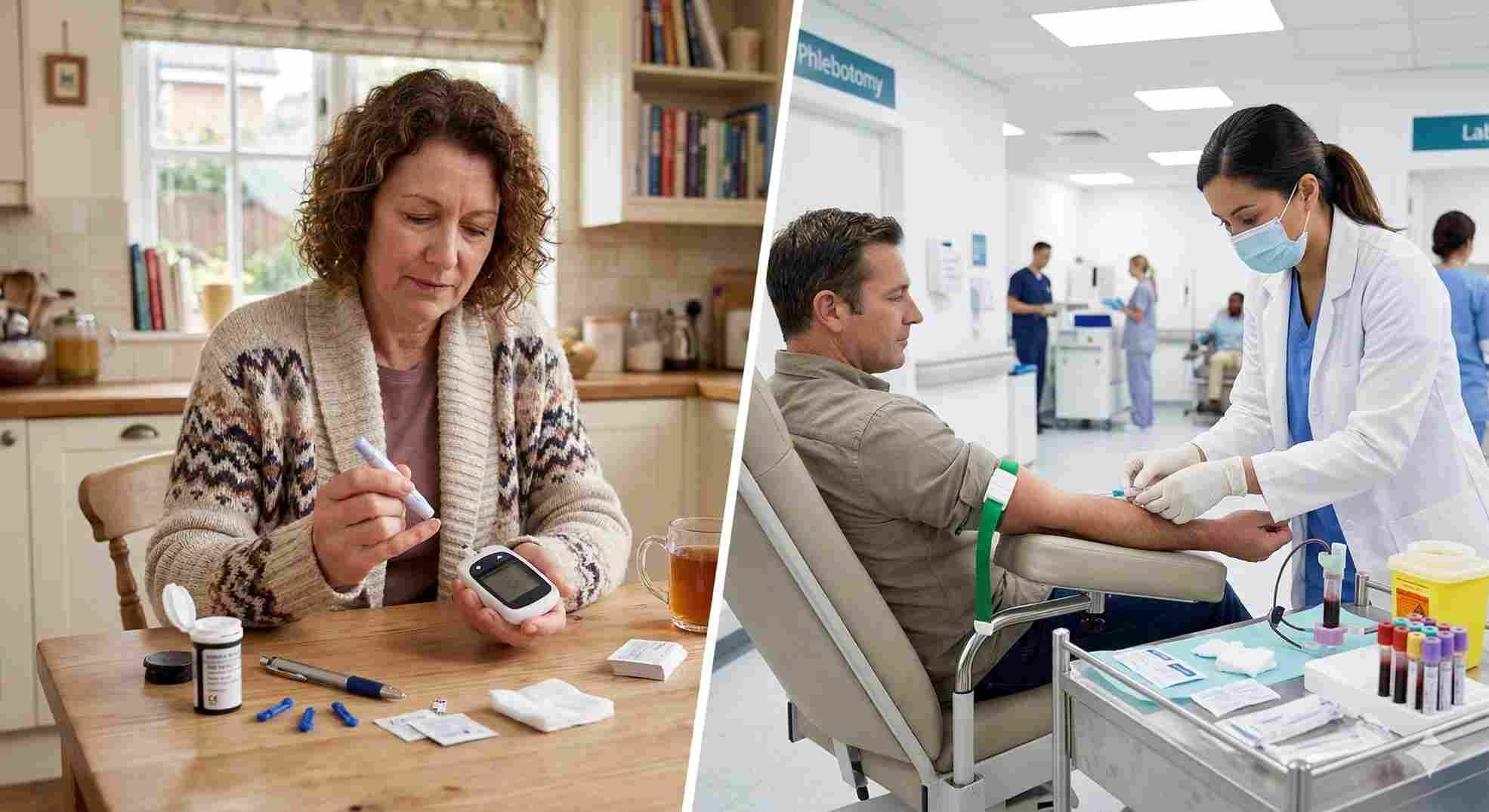
A lot of patients ask me if they can just skip the lab entirely if they know how to do the math at home. The short answer is no. At-home calculations are fantastic estimates. They guide your daily choices. But a lab test is a clinical diagnostic tool. Your doctor needs it.
At-Home A1c Estimates vs. Clinical Lab Tests
| Feature | At-Home eAG Calculation | Clinical Lab HbA1c Test |
|---|---|---|
| Accuracy | Good for trend tracking; relies heavily on your testing habits. | Highly accurate; the gold standard for medical diagnosis. |
| Convenience | Instant results; you do it right in your own home. | Requires a needle stick and blood draw at a clinic or lab. |
| Cost | Included in your standard daily testing supply costs. | Billed through your insurance; you may have copays. |
| Frequency | Can be checked daily or weekly based on your meter’s memory. | Typically ordered every 3 to 6 months by your doctor. |
 Essential Medical Equipment for Accurate Readings
You simply cannot calculate an accurate A1c if your daily numbers are wrong. The entire foundation of good diabetes management is high-quality medical equipment. If you use an outdated meter or test strips that expired six months ago, you will throw off your entire calculation.
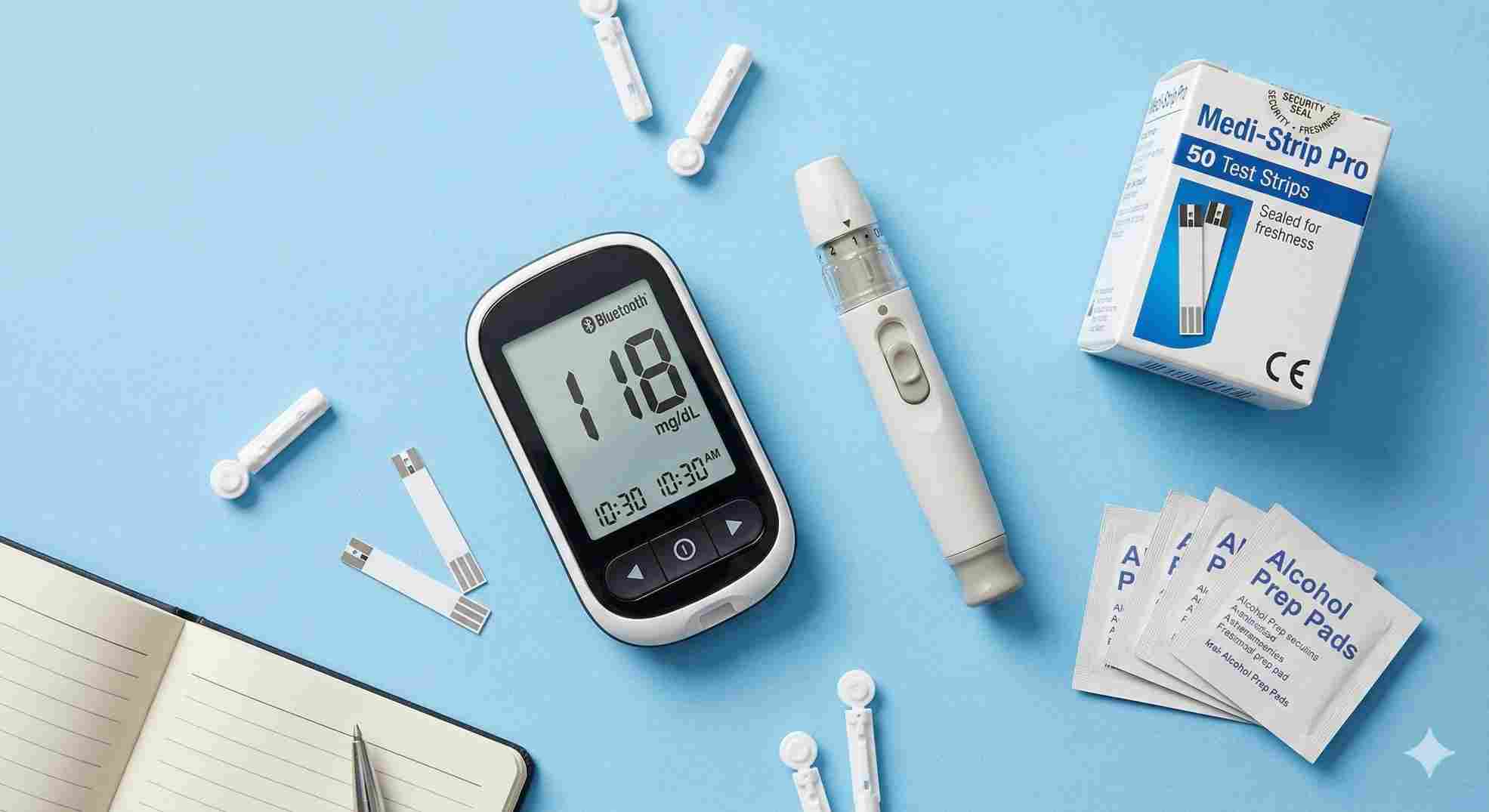
Here is what you need in your home to ensure your data is rock solid:
- A Modern Glucometer: Stop using the meter from ten years ago. Look for a device that automatically stores your readings and calculates your 7-day, 14-day, and 30-day averages. This saves you from doing the math manually on a notepad.
- High-Quality Test Strips: Always ensure your strips are unexpired and stored at the proper temperature. Heat and moisture ruin test strips fast.
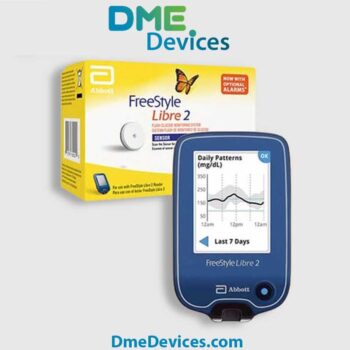
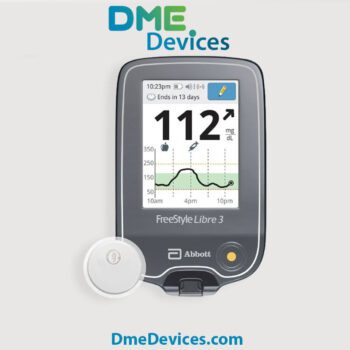
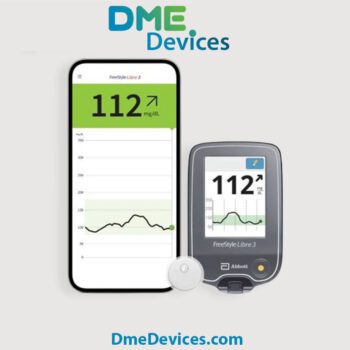
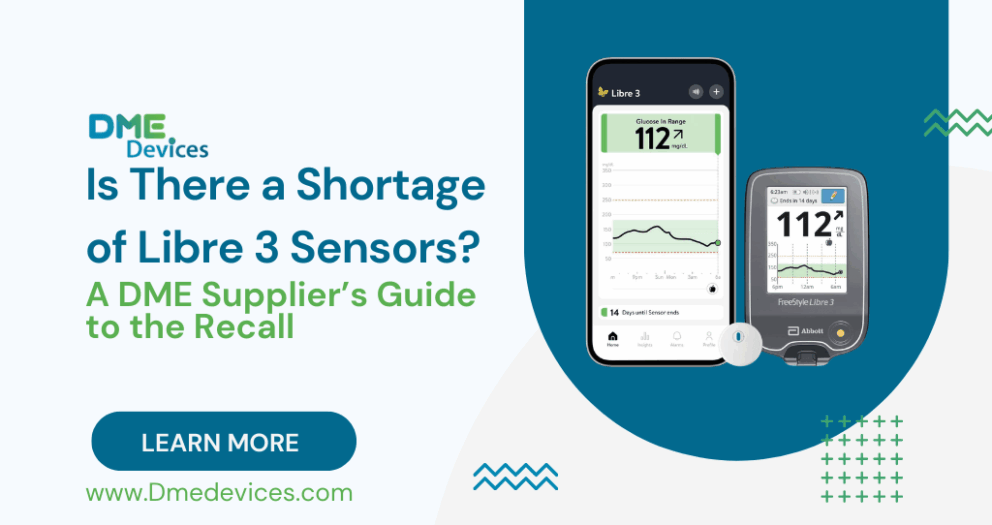
- Continuous Glucose Monitors (CGMs): Devices like the Dexcom or FreeStyle Libre are incredible. They take readings every few minutes. They provide the most accurate daily average possible without constant finger pricks.
- Fresh Lancets: Change your lancet every single time. A dull lancet causes unnecessary pain and can affect the blood drop size, which leads to a frustrating error code on your strip.
If you are a caregiver managing a parent’s supplies, keeping a steady inventory of these items is critical. Running out of strips on a Friday night means missing a whole weekend of data. That missing data makes your A1c estimate inaccurate.
Feature Specifications for Top Glucose Monitoring Methods
| Monitoring Method | Data Points per Day | Calculates eAG Automatically? | Best Suited For |
|---|---|---|---|
| Standard Glucometer | 2 to 6 (Based on user habits) | Some advanced models | Patients with Type 2 on oral meds. |
| Smart Glucometer (Bluetooth) | 2 to 6 (Based on user habits) | Yes (via smartphone app integration) | Tech-savvy users wanting easy tracking. |
| Continuous Glucose Monitor (CGM) | 288+ (Every 5 mins) | Yes | Patients on insulin; those with frequent low blood sugar. |
Tired of Sore Fingers and Confusing Math?
Pricking your finger four times a day just to guess your A1c is exhausting. Worse, you miss the hidden blood sugar spikes that happen while you sleep, leaving you frustrated when your lab results come back higher than you expected. What if you never had to do the math—or deal with the painful finger pricks—ever again?
With continuous glucose management, your data is tracked automatically every single minute. You get a complete, highly accurate picture of your health sent straight to your smartphone. Stop guessing your averages and start knowing your exact numbers.
 Using an Online Blood Glucose Converter
If you absolutely hate doing math, the internet is your best friend. A digital blood glucose converter is a simple, free online tool. You type in your average daily blood sugar reading, hit enter, and it instantly spits out your estimated A1c percentage.
You can find excellent calculators on websites managed by the American Diabetes Association or other major health organizations. To use these tools properly, you must first gather your average blood sugar over a minimum of 30 days. Finding an average from just three days of testing will not give you a true A1c estimate. Open your glucose meter’s memory, find the 30-day or 90-day average setting, and plug that specific number into the converter.
If you want a complete breakdown of how these tools work and why they matter so much, I highly recommend checking out our main guide: A1C Calculator: Let’s Make Sense of Your Numbers. It is packed with extra tips to help you read your results without the stress.
Actionable Tips for Better Blood Sugar Control
Once you figure out your estimated A1c, the next step is taking action. If your numbers are higher than your target, take a deep breath. Do not panic. Small, consistent daily changes make a massive difference over a 90-day period.
- Stay Hydrated: Drinking water helps your kidneys flush out excess sugar through your urine. It is a simple, free way to help your body out.
- Move After Meals: A gentle 15-minute walk after eating dinner significantly reduces the blood sugar spike that happens naturally during digestion.
- Check Your Hands: Make sure your hands are clean and completely dry before testing. Lotion, soap residue, or food on your fingers will artificially inflate your reading.
- Talk to Your Supplier: Ensure you are getting your testing supplies delivered on time. Set up a schedule so you never miss a day of tracking.
 Taking Charge of Your Health Today
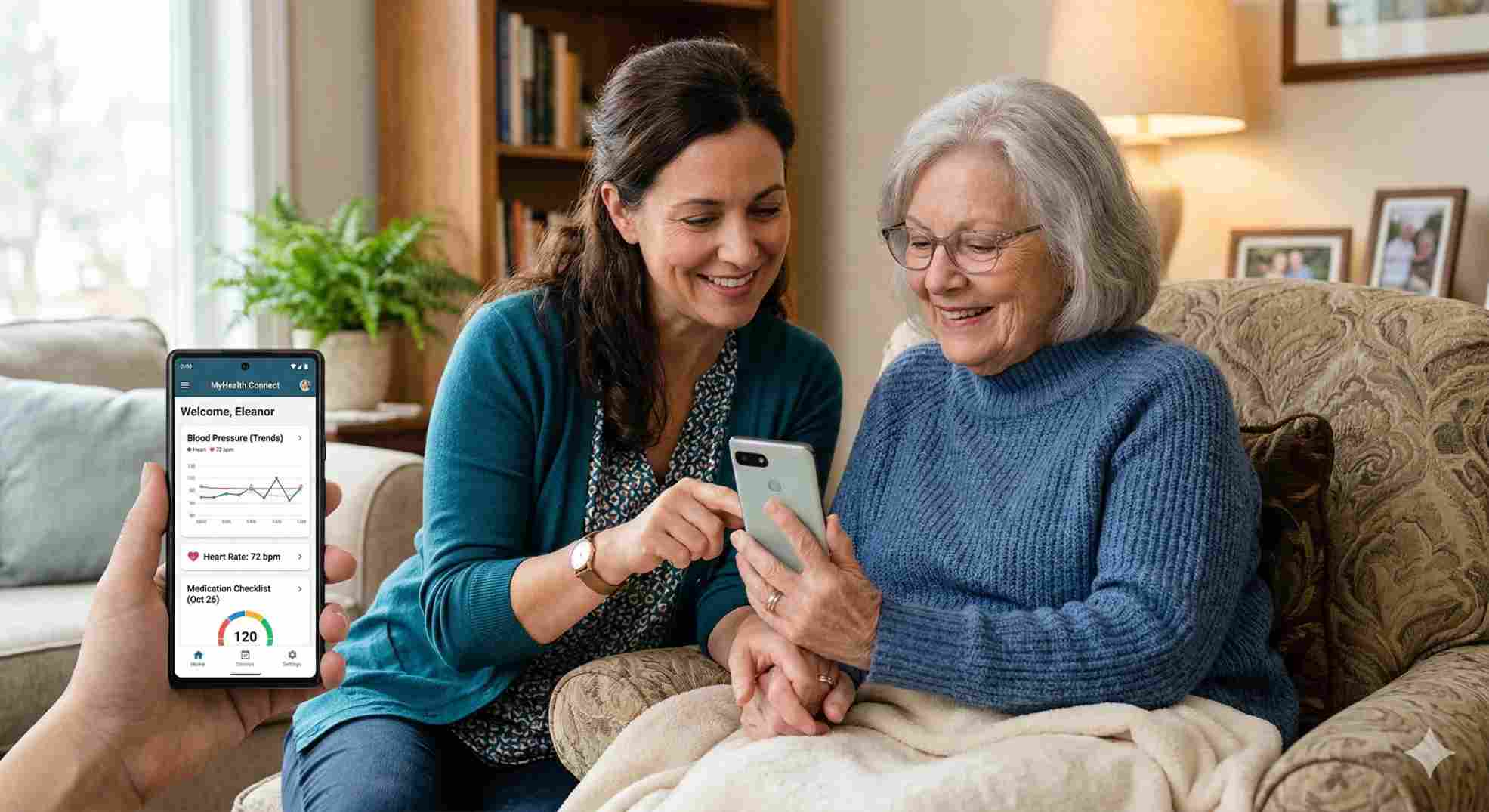
Living with diabetes means dealing with a lot of moving parts, doctor visits, and daily tasks. But knowledge truly is power. When you finally understand the relationship between your daily meals, your daily testing, and your long-term health, the anxiety starts to fade away. You transform from a worried patient into an active, confident manager of your own wellness.
Remember that the numbers on your meter are not a judgment of your character; they are simply information. They tell you what to do next. By learning exactly how to calculate hba1c at home, you secure a powerful tool in your healthcare toolkit. Keep checking your numbers, keep your medical equipment in top shape, and never hesitate to reach out to your medical provider or your trusted equipment supplier when you need support. You have got this.



How often should I test my blood sugar to estimate my A1c?
To get a useful estimate, you should test at least two to four times a day, depending on your doctor’s specific orders. The more data points you gather, the more accurate your calculated average will be.
Can I use my daily glucose monitor to completely replace a lab A1c test?
No. Your daily monitor provides an excellent estimate, but it cannot replace the clinical accuracy of a venous blood draw done at a certified laboratory. Your doctor still needs those official lab results to safely adjust your long-term care plan.
Will Medicare cover my continuous glucose monitor?
Medicare Part B frequently covers CGMs and related supplies if you meet specific criteria. Usually, this means you require insulin or have a documented history of problematic low blood sugar events. You will need a prescription and proper paperwork from your physician.
What is the best blood glucose converter available online?
The American Diabetes Association (ADA) provides a highly reliable and medically reviewed eAG/A1c calculator on their official website. It is completely free, secure, and uses the exact standard medical formula we discussed earlier.
How do I maintain and clean my testing equipment for accurate results?
Keep your meter clean by wiping it with a slightly damp cloth. Never submerge it in water. Store your test strips in their original vial with the cap tightly closed to prevent moisture damage. Always keep your medical supplies away from extreme heat or cold—never leave them in a hot car.




Write a comment
Your email address will not be published. All fields are required