
Managing diabetes is exhausting. Between watching every meal, remembering medications, and tracking daily blood sugar, the mental load is heavy. Add in the stress of packing up an elderly parent, driving them to a clinic, sitting in a crowded waiting room, and dealing with surprise lab bills just for a routine blood draw. It burns out patients and caregivers fast. But finding a reliable home a1c monitor changes this routine entirely. You get the exact same long-term data, but you get it right from your own kitchen table.
Having the right medical equipment matters right now because it gives you your time back. When you track your blood sugar trends from your living room, you take control. You stop second-guessing whether that new diet is actually working. You stop wondering if the new medication dose is doing its job. A dependable home a1c monitor takes the guesswork out of the months between your doctor visits, turning constant worry into hard, actionable numbers you can actually use.
The clinical-grade testing equipment once reserved for professional labs is now sitting on pharmacy shelves. You just need to know which one to pick. We are going to break down the most accurate testing kits, show you how to use them without wasting test strips, and explain exactly what features to look for so you can handle this condition with confidence.
The Insight: Stop Using Alcohol Prep Pads
Here is a secret most people miss until they ruin a test: put the alcohol prep pads away. If you want a perfectly accurate reading from your home a1c monitor, wash your hands with warm water and plain soap instead. Alcohol residue messes with the delicate chemical reaction inside the a1c testing machine, frequently causing a false reading. Plus, the warm water naturally draws blood to your fingertips. This makes it incredibly easy to get the larger blood drop you need without squeezing your finger until it bruises.
The Difference Between Daily Tests and Long-Term Tracking
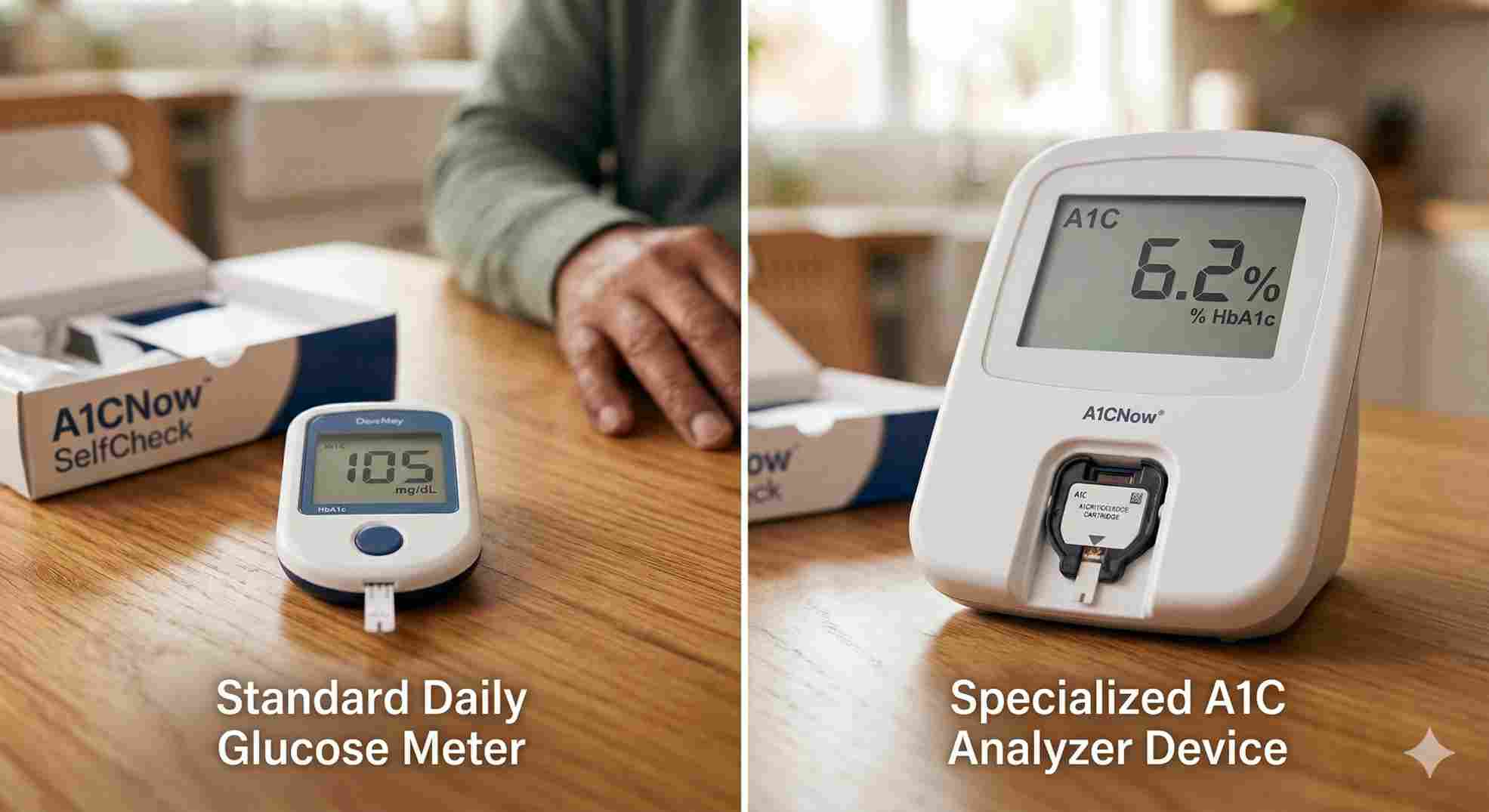
A lot of folks ask me why they need another machine if they already prick their finger every morning. It makes sense to ask. Why spend the money? Daily glucose meters only show your blood sugar for one single second. It is just a snapshot. A home a1c monitor, on the other hand, shows your 90-day average. It is the whole movie of your health over the past three months.
When you use a home a1c monitor, you see the actual impact of your daily choices. It measures the sugar attached to your red blood cells. Since those cells live for about 90 days, checking your levels with an at home a1c test gives your doctor a rock-solid historical baseline.
For caregivers, a home a1c monitor is a total lifesaver. You can monitor a sick or stubborn family member without forcing them out of the house. You keep them comfortable, but you still get the exact data the doctor needs to adjust their care.
Comparing Your Testing Tools
You really need both devices in your medicine cabinet. Let’s look at exactly how a home a1c monitor differs from your everyday glucose meter.
Table 1: Daily Glucose Meter vs. Home A1C Monitor
| Feature | Daily Glucose Meter | Home A1C Monitor |
|---|---|---|
| What it Measures | Blood sugar at that exact second | 90-day average of blood sugar levels |
| Testing Frequency | 1 to 4 times a day | 2 to 4 times a year |
| Sample Size Required | Tiny drop (0.3 to 0.5 microliters) | Larger drop (about 5 microliters) |
| Result Meaning | Adjust your next meal or insulin dose | Tells you if your overall treatment is working |
| Primary Use Case | Daily physical safety and emergency prevention | Long-term health tracking and doctor reviews |
 Can You Test Your A1C at Home and Trust It?
People always ask me, “Can you test your a1c at home and actually believe the number?” Yes. You absolutely can. These aren’t cheap toys. To sit on a pharmacy shelf, a home a1c monitor has to pass very strict FDA accuracy standards.
But let’s be realistic—no home a1c monitor is perfect. Even the expensive blood draws at a professional lab have a slight margin of error of about 0.5%. An otc a1c test hits that exact same margin. So, if your true lab result is 7.0%, a good home a1c monitor might read 6.6% or 7.4%. That is completely normal and perfectly fine for checking your progress between doctor visits.
If you find that your home readings are confusing when compared to your daily averages, you can use an A1C Calculator: Let’s Make Sense of Your Numbers to bridge the gap between your estimated average glucose and your percentage result. This helps ensure your home a1c monitor is giving you a number that matches how you’ve been feeling lately.
Top Home A1C Monitor Devices to Consider
Walk into any pharmacy or search for medical equipment online, and you will see a ton of options. Picking the best home a1c monitor really comes down to what you want to spend and how often you test. Here is the straightforward breakdown of the most reliable kits.
A1CNow SelfCheck
The A1CNow system is the heavy hitter in this category. Pharmacists recommend it constantly, and you can find it almost anywhere. This a1c device spits out your results in exactly five minutes. If you want fast, lab-quality numbers without a confusing instruction manual, this is usually the best bet.
Store Brands (CVS Health and Walgreens)
CVS and Walgreens sell their own versions of a home a1c monitor. Here is the open secret: they are usually made by the exact same factories that produce the expensive name brands. You get the exact same tech, just in a different box and for less money. They typically come with two tests per kit.
ReliOn (Walmart)
When budgets are tight, Walmart’s ReliOn brand steps up. If you need a cheap, reliable home a1c monitor, this is the one to grab. It works just like the bigger brands and gives you a clear digital reading without draining your wallet.
Mail-in Kits
These aren’t exactly immediate. You prick your finger, drip the blood on a card, mail it off, and get a text a few days later with your results. It lacks the instant feedback of a standard home a1c monitor, but it is an option if you want a certified lab tech to run the numbers without leaving your house.
Table 2: Comparing Popular Home A1C Monitor Brands
| Brand / Model | Tests per Kit | Time to Result | The Big Benefit |
|---|---|---|---|
| A1CNow SelfCheck | 2 or 4 tests | 5 minutes | Highly accurate, widely trusted by doctors |
| CVS Health At Home | 2 tests | 5 minutes | Easy to find locally, very simple instructions |
| Walgreens A1C Kit | 2 tests | 5 minutes | Solid value, features a clear digital screen |
| ReliOn (Walmart) | 2 tests | 5 minutes | The most budget-friendly option on the shelf |
 Step-by-Step: Getting Your Reading Right
If you are sitting there thinking, “how can I check my a1c at home without messing up the expensive test strips?”, you aren’t alone. Doing this for the first time feels a bit like a science experiment. A home a1c monitor requires a few more steps than your morning glucose check, including a weird little shaker tube.
Here is how you get a perfect reading on the first try:
Step 1: Prep the Area
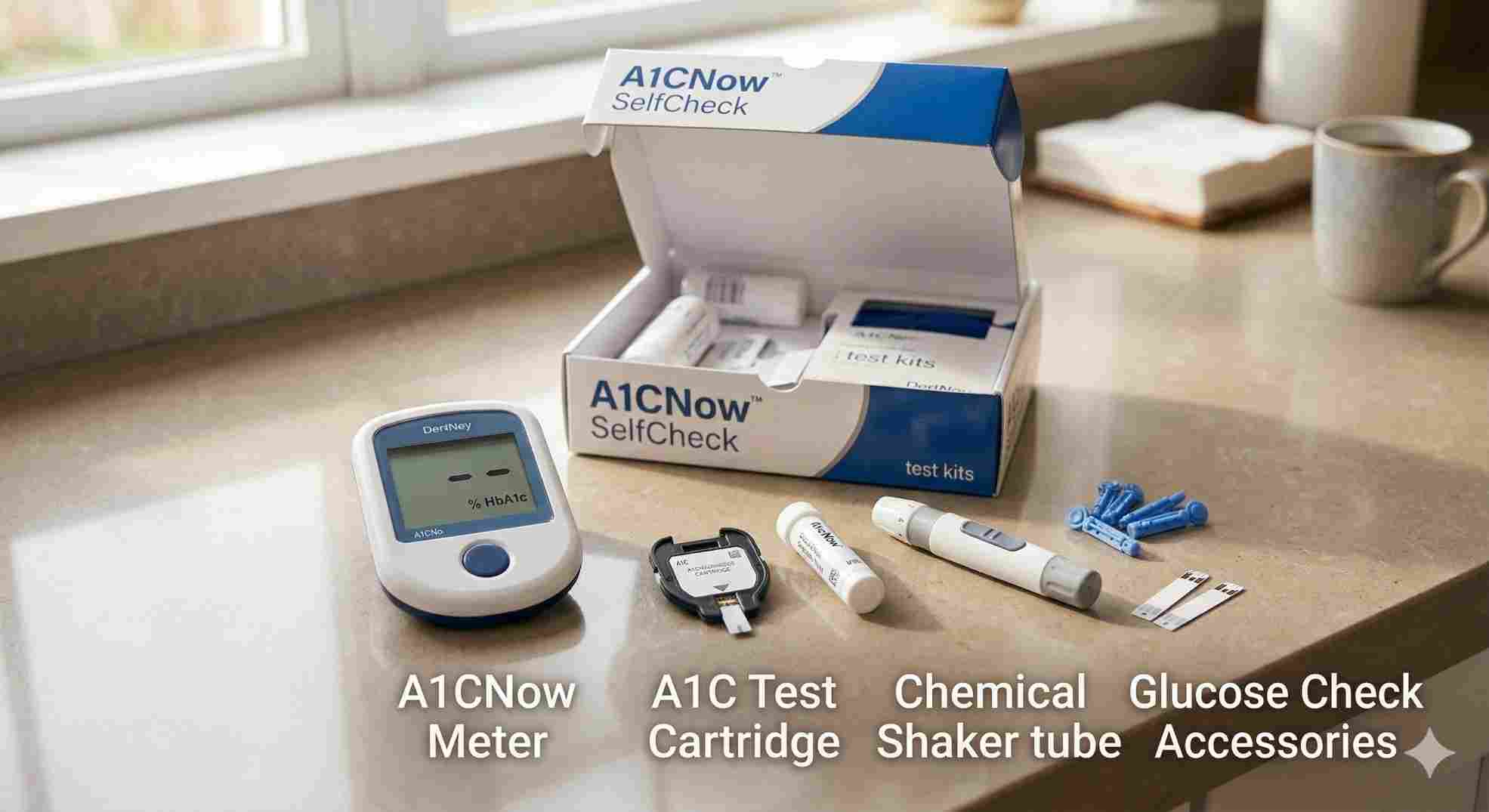
Keep the foil pouches sealed for now. Wash your hands with warm water and soap, and dry them totally. Open the box for your home a1c monitor and put the shaker tube, the test cartridge, and the lancet on the table. Do not put the cartridge into the a1c machine yet. Once you snap it in, a countdown timer starts. Be ready before you start the clock.
Step 2: Form a Good Blood Drop
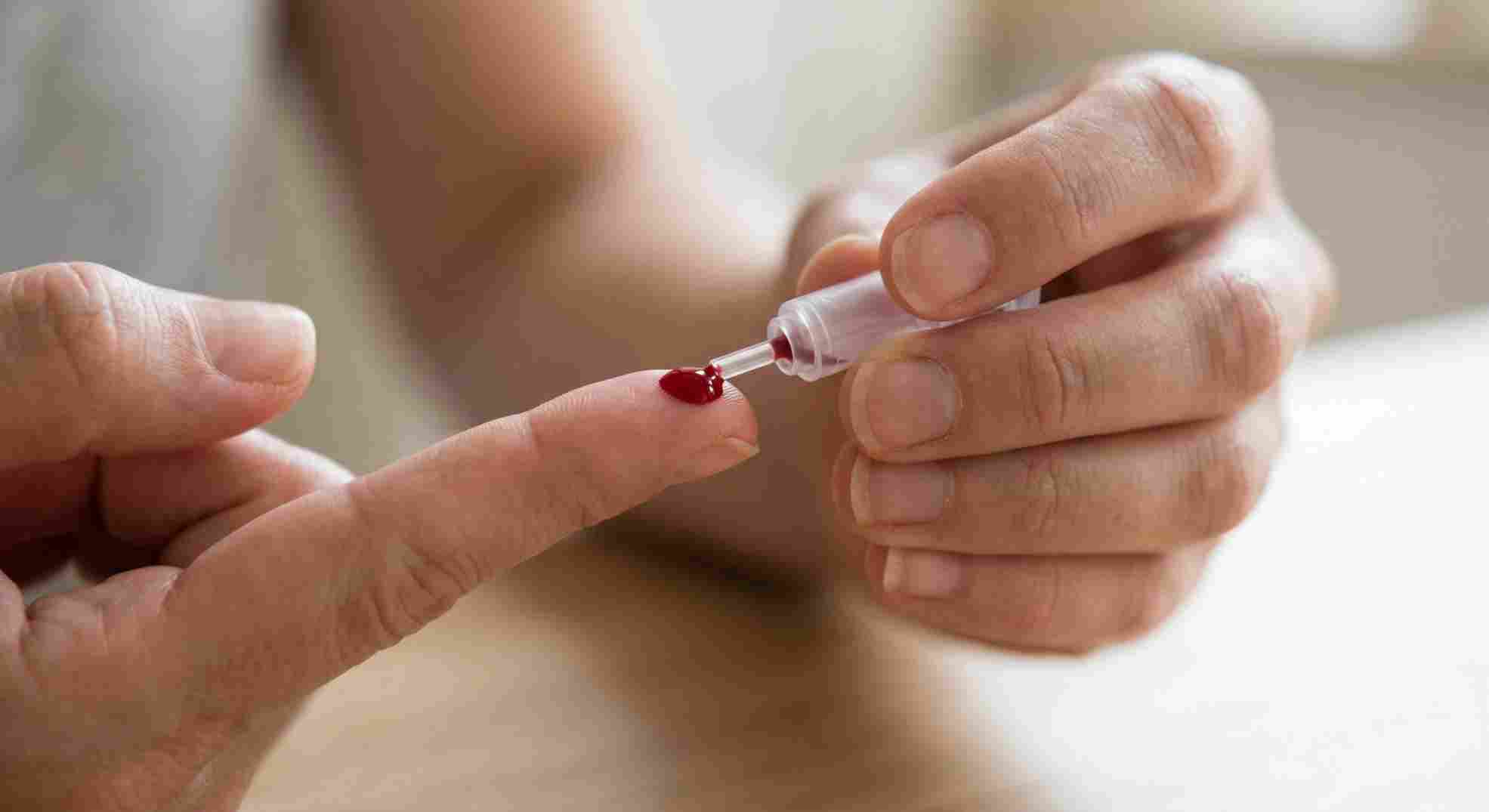
You need more blood for a home a1c monitor than you do for a daily check. Use the lancet on the side of your fingertip—it has fewer nerve endings than the pad, so it hurts less. Wipe the first drop of blood away with a tissue. Then, gently massage your finger from the knuckle down to form a nice, plump drop of blood.
Step 3: Collect and Shake
Take the tiny blood collector from your home a1c monitor kit and lightly touch it to the blood drop. It acts like a straw and sucks up the exact right amount. Push that collector into the chemical shaker tube. Shake it hard for however long the manual says (usually about 6 to 8 strong shakes). This mixes the blood into the testing chemicals.
Step 4: Run the Test
Now, click the test cartridge into your home a1c monitor. The screen will flash to tell you it is ready. Pour the mixed liquid from your shaker directly onto the cartridge pad. Set a timer for five minutes and don’t touch the table. Don’t bump the home a1c monitor. Just let it sit. When the time is up, your 90-day average will pop up on the screen.
 How to Pay for Your Medical Equipment
Dealing with the ongoing costs of diabetes is frustrating. Medical supplies add up fast. Everyone wants to know if their insurance will pick up the tab for a home a1c monitor.
Honestly, standard over-the-counter a1c testing devices usually aren’t covered by private insurance or Medicare Part B. Medicare pays for the blood draw your doctor orders at the lab. Because the government views a home a1c monitor as a convenience item rather than a strict necessity, you almost always have to pay cash for it at the pharmacy register.
But you have a workaround. You can use your Health Savings Account (HSA) or Flexible Spending Account (FSA) card to buy a home a1c monitor. This lets you use money you saved before taxes, which takes the sting out of the retail price.
Can you find a free a1c test kit? Sometimes, but it takes work. Check with your local county health department or community clinics during November, which is National Diabetes Month. They often run free screening events or hand out sample kits.
Table 3: Payment Options for a Home A1C Monitor
| Payment Method | Covers a Home A1C Monitor? | The Reality |
|---|---|---|
| Medicare Part B | Usually No | They pay for doctor-ordered lab tests, not pharmacy kits. |
| Private Insurance | Mostly No | Very rare for standard health plans to cover OTC test kits. |
| HSA / FSA Cards | Yes | Swipe your card. These are approved, pre-tax medical expenses. |
| Cash / Out of Pocket | Yes | Plan to spend around $40 to $60 for a box with two tests. |

What Your Number Actually Means
So, your home a1c monitor just flashed a number at you. What do you do with it? You need to know the baseline ranges so you can actually talk to your doctor about what is going on. A1c meters give you the raw math, but your doctor decides what it means for your life.
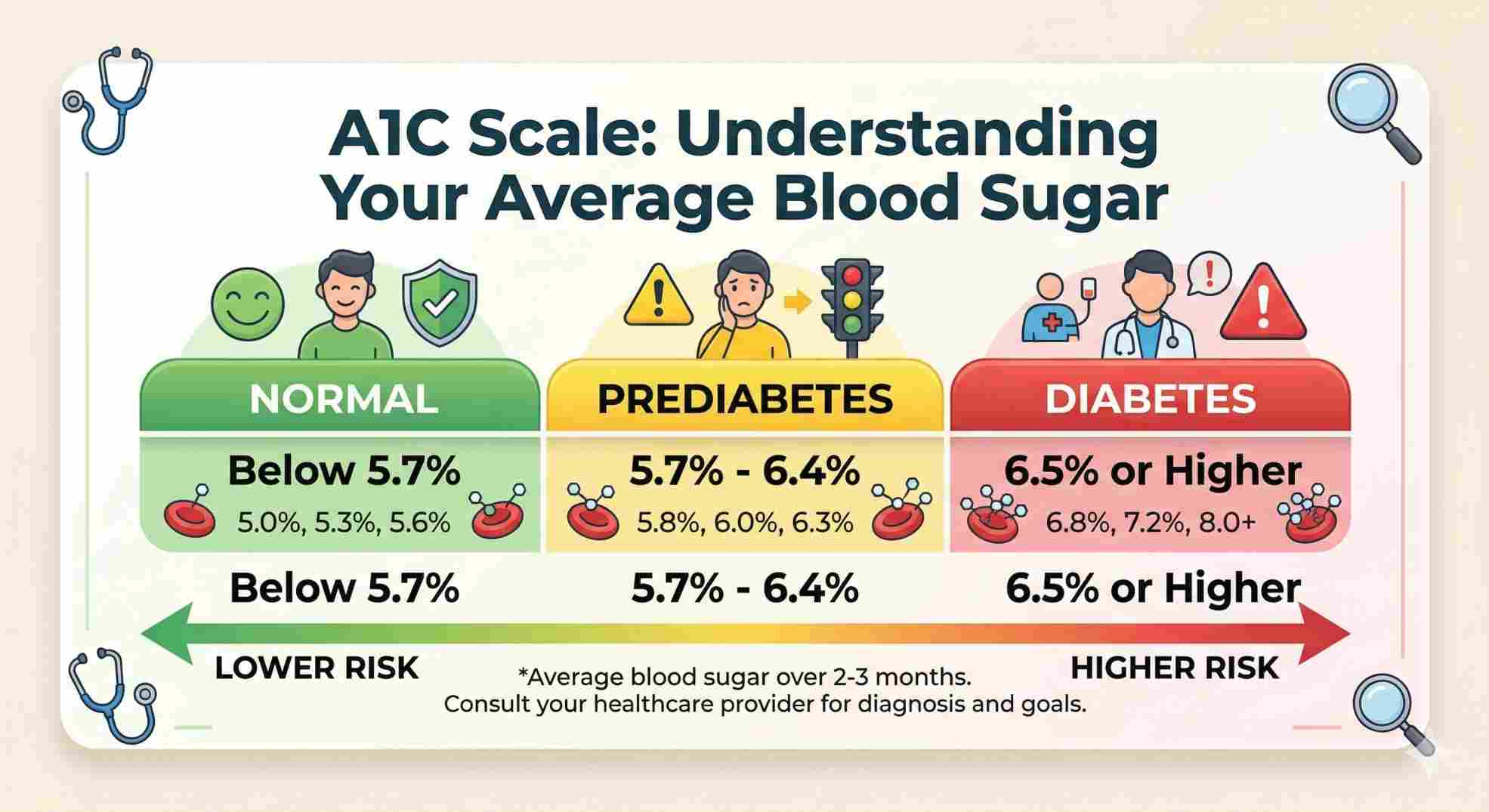
If your home a1c monitor reads between 4.0% and 5.6%, you are sitting in the normal, healthy range. If it pops up between 5.7% and 6.4%, you have prediabetes. That is a loud warning bell telling you to fix your diet and get moving before things get worse. A reading of 6.5% or higher on your home a1c monitor means you are dealing with active diabetes.
If you already know you are diabetic, your doctor has likely given you a target number. Most adults try to keep the reading on their home a1c monitor under 7.0%. But that number shifts depending on how old you are and what other health problems you have. Whenever you run a test, message the results from your home a1c monitor to your doctor’s office. Never tweak your own insulin or skip your pills just because your at home a1c test looked good today.
Ready to Stop Pricking Your Finger Every Day?
While a home a1c monitor is great for checking your 90-day progress, daily finger pricks are still painful, messy, and frustrating. Worse, you are forced to wait until you actually feel sick to realize your blood sugar is spiking or dropping dangerously low.
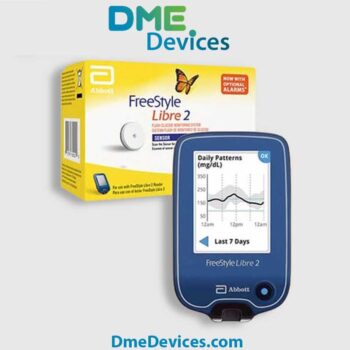
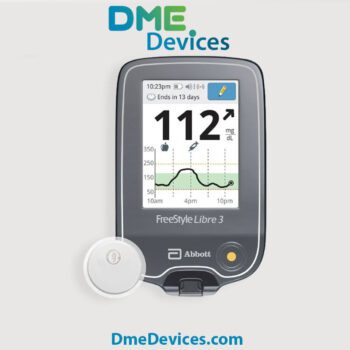
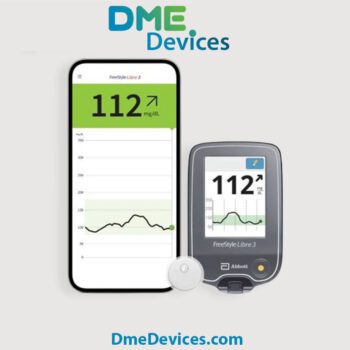
But what if you never had to draw blood for a daily reading again? What if you could just glance at your phone and see exactly what your blood sugar is doing right now? By upgrading to Continuous Glucose Management (CGM) technology, you get real-time data, trend arrows, and alarms that catch blood sugar drops before they become emergencies. Take the pain out of your daily routine and take total control of your numbers today.
Taking Ownership of Your Health
Handling diabetes takes a lot of daily grit. But adding a reliable home a1c monitor to your life takes away a massive amount of the unknown. Buy a decent kit, read the instructions before you prick your finger, and use your HSA card to cover the cost. You can completely bypass the awful waiting rooms and still get the medical data you need. Remember, the number on your home a1c monitor isn’t a grade on your character. It is just a tool pointing you and your doctor toward a better, healthier week. Use your home a1c monitor, talk honestly with your medical team, and get back to living your life.
Medical Disclaimer: The information provided regarding any home a1c monitor is for educational purposes only and should not replace professional medical advice. Always consult your healthcare provider before making changes to your treatment plan.



How often should I pull out my home a1c monitor?
Doctors generally want you checking your A1C every three to six months. Since the test calculates a 90-day average, doing it every few weeks with your home a1c monitor is just a waste of expensive strips. Stick to a quarterly routine unless your doctor tells you otherwise.
Are at home A1C tests actually as accurate as the hospital lab?
Yes, a decent home a1c monitor gets very close to hospital numbers. They are cleared by the FDA and stay within a tiny 0.5% margin of error. Just know that if you have severe anemia, kidney disease, or recently lost a lot of blood, both the hospital lab and your home a1c monitor might show skewed results.
Is there any way to get a free a1c test kit?
It is tough to find a completely free a1c test kit just sitting around. Try calling your local health department or checking with diabetes non-profits during November (Diabetes Awareness Month). They run free testing drives then. Otherwise, lean on your HSA funds to pay for it.
Do a1c monitoring devices need a prescription from my doctor?
No. You do not need anyone’s permission or a prescription to buy a home a1c monitor. They are standard over-the-counter items. You can buy check a1c at home kits at Walmart, order them on Amazon, or grab them at CVS without a hassle.
What do I do if my otc a1c test reads way too high?
Take a breath and don’t panic. If your home a1c monitor shows a scary number, snap a photo of the screen with your phone and send it to your doctor. A high number on a home a1c monitor is just an alert. It means your current food habits or medications aren’t cutting it anymore and you need a quick adjustment.




Write a comment
Your email address will not be published. All fields are required