
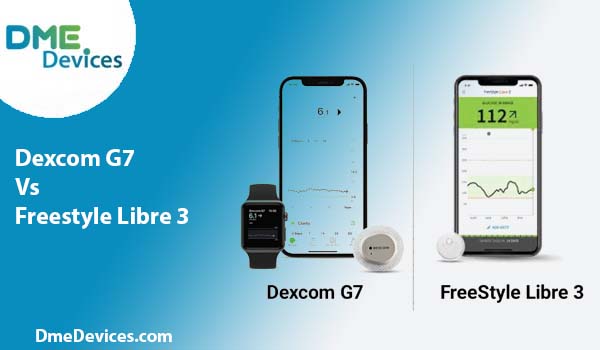
Managing diabetes is a full-time commitment. It is a 24/7 responsibility that requires constant vigilance, precision, and the right tools. If you have been managing your health for a while, you likely remember the challenging days of relying solely on fingersticks—carrying around a bulky meter, test strips, and lancets, all while guessing what your glucose levels were doing in between checks.
The landscape of diabetes care has shifted dramatically with the arrival of Continuous Glucose Monitors (CGMs). These devices have moved care from taking static snapshots to watching a live movie of your health. However, this technological leap brings a new challenge: “Analysis Paralysis.” With two incredible options dominating the market, how do you choose the right one?
The two heavyweights are undeniable: the Freestyle Libre 3 (including the new Libre 3 Plus) and the Dexcom G7. On paper, they appear very similar. They both adhere to the arm, stream data to a smartphone, and eliminate the need for routine fingersticks. But the differences that matter most in the freestyle libre 3 vs dexcom g7 debate are found in the daily details.
In this comprehensive guide, we break down the freestyle libre 3 vs dexcom g7 comparison, looking beyond the brochures to the real-world factors that impact your daily life—accuracy, comfort, sleep, and the practical features that define the freestyle libre 3 vs dexcom g7 experience.
The Basics: Understanding “Real-Time” Monitoring
Before diving into the specifications, it is important to understand why these two specific devices are the market leaders. Both the Freestyle Libre 3 and the Dexcom G7 are “Real-Time CGMs” (rt-CGM).
Unlike older “Flash” monitoring systems that required you to physically scan the sensor with a phone to get a reading, these devices push data automatically. In the context of freestyle libre 3 vs dexcom g7, both transmit glucose levels to your smartphone via Bluetooth every 1 to 5 minutes. This is a critical safety feature, ensuring the device can alert you to highs or lows even while you are asleep or driving, without any action required on your part.
Head-to-Head: The Technical Specifications
To make an informed decision, you need to look at the hard data. These specifications often act as the primary filter for patients deciding on the freestyle libre 3 vs dexcom g7.
Comparison Table 1: Technical Specs
| Feature | Freestyle Libre 3 / 3 Plus | Dexcom G7 |
|---|---|---|
| Sensor Lifespan | 14 Days (Standard) / 15 Days (Plus) | 10 Days (+12-hour grace period) |
| Warm-Up Time | 60 Minutes | 30 Minutes |
| Calibration | Factory Calibrated (No manual option) | Factory Calibrated (Manual option allowed) |
| Bluetooth Range | ~33 feet | ~20 feet |
| Age Approval | Ages 4 and up | Ages 2 and up |
| Transmitter | Built-in (Disposable) | Built-in (Disposable) |
Looking at the table, the dexcom g7 vs freestyle libre 3 strategies become clear. Dexcom is built for speed and flexibility (fast warm-up, younger age range), while Libre is built for longevity and minimal interaction (14-15 day wear).
Deep Dive: Accuracy and Reliability
One of the most frequent questions in the freestyle libre 3 vs dexcom g7 discussion is: “Which device is more accurate?”
In the clinical world, accuracy is measured using MARD (Mean Absolute Relative Difference). This metric represents the average percentage difference between the sensor reading and a lab-quality blood reference. A lower number indicates higher accuracy.
- Freestyle Libre 3: Approximately 7.9% MARD
- Dexcom G7: Approximately 8.2% MARD
Technically, the Libre 3 has a slight statistical edge. However, in real-world usage of dexcom g7 sensor vs freestyle libre 3, both devices are exceptionally accurate. If your blood sugar is 120 mg/dL, the Libre might read 118 while the Dexcom reads 123. Both fall well within the clinical standards set by the American Diabetes Association required to make safe treatment decisions.
The “Compression Low” Phenomenon
A quirk common to all CGMs is the Compression Low. This occurs when you sleep directly on the sensor, pushing fluid away from the tissue. The sensor detects this lack of glucose-rich fluid and may trigger a false low alarm. In the freestyle libre 3 vs dexcom g7 comparison, the Libre 3’s incredibly flat profile makes it slightly less prone to this issue simply because it digs into the arm less, though it can happen with any brand.
Form Factor: The “Doorframe Factor”
Experienced CGM users are familiar with “The Doorframe Check”—accidentally clipping a sensor on a doorframe and ripping it off. The physical design of the device plays a huge role in the freestyle libre 3 vs dexcom g7 durability battle.
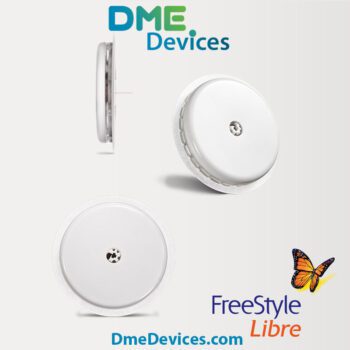
The Freestyle Libre 3 is the clear winner in terms of size. It is roughly the size of two stacked pennies and sits flush against the skin. Its low profile makes it very difficult to snag on clothing or furniture, giving it an advantage in the freestyle libre 3 vs dexcom g7 size comparison.
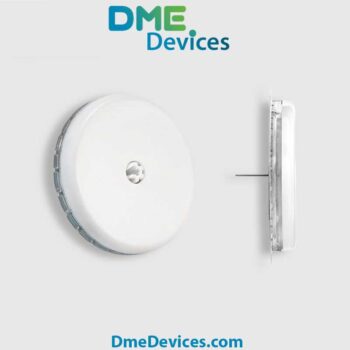
The Dexcom G7 is a vast improvement over previous generations, being 60% smaller than the G6. However, it still has a slightly higher profile than the Libre. To combat this, Dexcom includes an adhesive “overpatch” (a plastic sticker ring) in every box to help secure the sensor. Abbott generally does not include overpatches, relying on the sensor’s small footprint to keep it attached.
Skin Care: Adhesion and Comfort
Since these devices are attached to your body for up to two weeks, skin health is a major consideration in the freestyle libre 3 vs dexcom g7 decision.
Dexcom G7 Adhesive:
The G7 uses a medical-grade acrylic adhesive designed to hold the sensor for 10 days. Because the change frequency is higher (every 10 days), the skin is subjected to adhesive removal more often. Using an adhesive remover or baby oil is recommended to prevent irritation during removal.
Freestyle Libre 3 Adhesive:
The Libre adhesive is robust, designed to last 14 or 15 days. While the smaller surface area is good for breathability, the longer wear time means it must survive more showers and workouts.
Pro Tip: For those with active lifestyles or who live in humid climates, applying a liquid barrier wipe like “Skin-Tac” before application can create a tacky surface that protects the skin and ensures the sensor stays locked in place for the full duration.
Pediatric Use: Considerations for Kids
For parents choosing a device for a child, the dexcom g7 vs freestyle libre 3 decision often hinges on remote monitoring features.
Dexcom G7 (Ages 2+):
Dexcom is often favored for pediatric use due to its remote monitoring capabilities. The “Dexcom Follow” app allows parents, school nurses, and caregivers to view the child’s glucose numbers on their own phones in real-time. Additionally, the G7 allows users to silence the “Urgent Low” alarm for short periods, which can prevent waking the entire household once a low is already being treated.
Freestyle Libre 3 (Ages 4+):
The Libre 3 utilizes the “LibreLinkUp” app, which also offers excellent remote monitoring for parents. However, the approved age range starts at 4 years old. The primary advantage for active children in the freestyle libre 3 vs dexcom g7 matchup is the Libre’s flush profile, which is less likely to be knocked off during play or sports.
The New Challenger: Freestyle Libre 3 Plus vs Dexcom G7
Abbott recently introduced the Freestyle Libre 3 Plus, addressing the primary gap between the two brands: Automated Insulin Delivery (AID) Integration.
Previously, insulin pump users were largely limited to Dexcom because the Libre 3 did not communicate with pumps. The Freestyle Libre 3 Plus changes this dynamic. It is now compatible with major systems like the Tandem t:slim X2 and the Beta Bionics iLet.
When comparing freestyle libre 3 plus vs dexcom g7 for pump users:
Dexcom G7: Compatible with Tandem, Omnipod 5, and iLet.
Libre 3 Plus: Compatible with Tandem and iLet (Omnipod integration is in progress).
Furthermore, the Libre 3 Plus extends wear time to 15 days, offering a significant convenience advantage over the 10-day Dexcom G7 in the freestyle libre 3 plus vs dexcom g7 comparison.
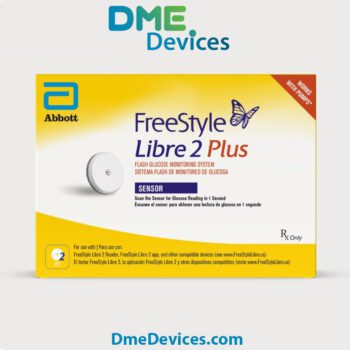
Buy Freestyle Libre 3 Plus Sensor
Travel and Security: The Airport Question
Traveling with a CGM is a common source of anxiety. Can you wear these devices through airport security? This is a frequent question when researching freestyle libre 3 vs dexcom g7.
Officially, manufacturers of both the freestyle libre 3 and dexcom g7 recommend avoiding full-body scanners (millimeter wave scanners) and avoiding sending spare sensors through x-ray belts (carry-on luggage scanners). The radiation can theoretically damage the sensor.
While many users pass through standard metal detectors without issue, the safest protocol is to request a “Hand Wand” or manual pat-down, consistent with TSA special procedures for disabilities and medical conditions. These are FDA-approved medical devices, and you have the right to keep them on your person at all times.
Daily Annoyances: Warm-Up and Grace Periods
Small features often make the biggest difference in daily satisfaction. The “Gap” in data during a sensor change is one such feature in the freestyle libre 3 vs dexcom g7 rivalry.
Warm-Up Time:
- Dexcom G7: 30 Minutes. This is the fastest in the industry. You can change a sensor before a meal and have data back before you finish eating.
- Freestyle Libre 3: 60 Minutes. This leaves a one-hour window where you must rely on fingersticks.
The Grace Period Advantage:
The Dexcom G7 features a 12-hour grace period. If a sensor expires at 10 PM, it will continue working until 10 AM the next day, allowing you to sleep through the night and change it at a convenient time. The Freestyle Libre 3 has a “Hard Stop”—when the 14 days are up, the sensor shuts off immediately. This grace period is a major point for G7 in the dexcom g7 vs freestyle libre 3 convenience battle.
Connectivity: The Apple Watch Factor
For smartwatch users, connectivity is often the deciding factor in finding the best continuous glucose monitor dexcom g7 vs freestyle libre 3.
Dexcom G7 Direct-to-Watch:
The G7 has the ability to connect directly to an Apple Watch. This means you can leave your phone at home, go for a run, and still view live glucose data on your wrist.
Freestyle Libre 3:
Currently, the Libre 3 requires the phone to be nearby to bridge data to the watch. If the phone is out of range, the watch will not display glucose data. While updates are expected, Dexcom currently holds the advantage for athletes in the freestyle libre 3 vs dexcom g7 race.
Comparison Table 2: User Experience & Lifestyle
| Scenario | Freestyle Libre 3 | Dexcom G7 |
|---|---|---|
| Forget to change sensor | System stops immediately. | 12-hour grace period keeps it running. |
| Alert Fatigue | Limited customization. | “Silence All” and “Delay High” modes. |
| Calibration Needed | Not possible. | Easy to enter fingerstick value. |
| Cost (Cash Pay) | $$ (More Affordable) | $$$ (Premium Price) |
Cost and Insurance: The Financial Reality
For many patients, the decision in the freestyle libre 3 vs dexcom g7 debate ultimately comes down to cost and coverage.
Freestyle Libre 3:
Abbott has positioned the Libre system as the accessible option. For those paying out of pocket or with high-deductible insurance plans, the cash price at pharmacies is often significantly lower than competitors. Manufacturer coupons and programs can bring the monthly cost down to a range of $75-$150, making it a viable option for Type 2 diabetics who may not have full CGM coverage.
Dexcom G7:
The Dexcom G7 is a premium device. While it has excellent insurance coverage—including Medicare and most private plans for those on insulin—the retail cash price is higher. If you are uninsured or do not meet coverage criteria, the out-of-pocket cost for the G7 will likely be higher than the Libre.
Final Verdict: Making the Right Choice
There is no single “perfect” device, but there is likely a perfect device for your specific needs. The dexcom g7 sensor vs freestyle libre 3 comparison highlights that both are exceptional tools for health management, yet they serve different priorities.
Choose the Freestyle Libre 3 / 3 Plus if:
- Budget is a priority: You need the most affordable option for cash payment.
- Discretion is key: You want the smallest, least visible sensor available.
- Convenience matters: You prefer changing your sensor every 15 days rather than every 10.
- Simplicity is preferred: You want a “set it and forget it” experience without complex settings.
Choose the Dexcom G7 if:
- You are an athlete: You need Direct-to-Watch connectivity without carrying a phone.
- You want control: You prefer the ability to manually calibrate the sensor with fingersticks.
- Flexibility is needed: You need the 12-hour grace period to change sensors on your schedule.
- Alerts bother you: You need “Quiet Modes” or “Delay 1st High” features to manage alarm fatigue.
- Pump Compatibility: You are using the Omnipod 5 system (currently the primary integration).
Both devices represent the pinnacle of modern diabetes technology. They offer safety, reduce A1C levels, and provide the freedom to live life without constant worry.
Ready to take control of your health?
Ensure you are purchasing from a reputable DME provider to guarantee you receive the correct prescription and equipment.
For the longest-lasting sensor:
Buy Freestyle Libre 3 Plus Sensor
For the most customizable features:






Write a comment
Your email address will not be published. All fields are required