
Key Takeaways
The “Silent” Phase: Complications like nerve damage often start years before you ever feel sick or get a diagnosis.
The Big 4: Doctors use A1C, Fasting Plasma Glucose, Oral Glucose Tolerance, and Random Plasma Glucose tests to see what’s really going on.
The Magic Window: Catching a fasting number between 100–125 mg/dL gives you a chance to turn things around before the damage sticks.
Watch for False Flags: Things like dehydration or being anemic can mess with your results. You need to know when a test might be lying to you.
Most people think diabetes hits you like a truck. You wake up one day, you’re thirsty, and you have it.
That’s rarely how it happens. And that misconception is dangerous.
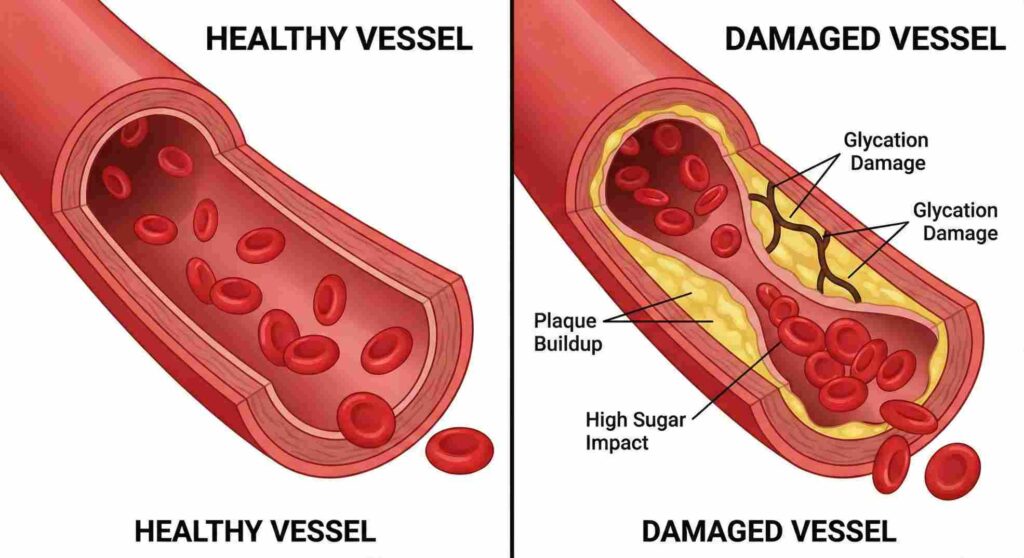
The truth is, high blood sugar is a quiet, slow-moving disaster. It works in the background, sometimes for a decade, before a doctor ever writes “Type 2 Diabetes” on your chart. Think of your blood vessels like copper pipes in an old house. Excess sugar is like rust. It doesn’t burst the pipe overnight. It slowly corrodes the lining, week after week, year after year.
By the time you notice a leak—maybe your toes feel numb, or your vision gets a little blurry—the “rust” has already done its job. That structural damage? That’s what we call diabetes complications.
Waiting until you feel sick is a bad strategy. If you want to protect your kidneys, eyes, and nerves, you have to look for the rust before the pipe breaks. You need to know about the 4 top tests for diabetes and, more importantly, what the numbers actually mean for your future.
The “Rust” You Can’t See
Before we get into the testing, let’s look at why 126 mg/dL is such a scary number for doctors.
It comes down to your capillaries. These are the tiniest blood vessels in your body—thinner than a single hair. They feed your retina (eyes), your kidneys, and your nerves.
When your blood sugar stays high, two things happen:
The Pressure Builds: Sugar acts like a sponge. It pulls water into your blood vessels, increasing pressure until those tiny capillaries start to leak or burst.
Things Get Sticky: This is the “rust.” Sugar binds to proteins in your blood, creating sticky molecules that stiffen your vessel walls.
This is why diabetes complications show up everywhere. It’s not just a “sugar problem.” It’s a blood vessel problem. The tests below are basically your early warning system. They tell you if your system is under stress before things start breaking.
The 4 Tests (And What They Really Tell You)
If you’re asking “how is diabetes diagnosed,” it’s not just a one-and-done finger prick. To get the full picture, doctors need to look at your blood from a few different angles.
1. The A1C Test (The Truth Teller)
Think of the A1C as a security camera that’s been recording you for the last three months.
A standard finger-prick test just tells you what your sugar is doing right this second. But the A1C test? It doesn’t care if you ate a salad today. It knows if you’ve been eating donuts for the last six weeks.
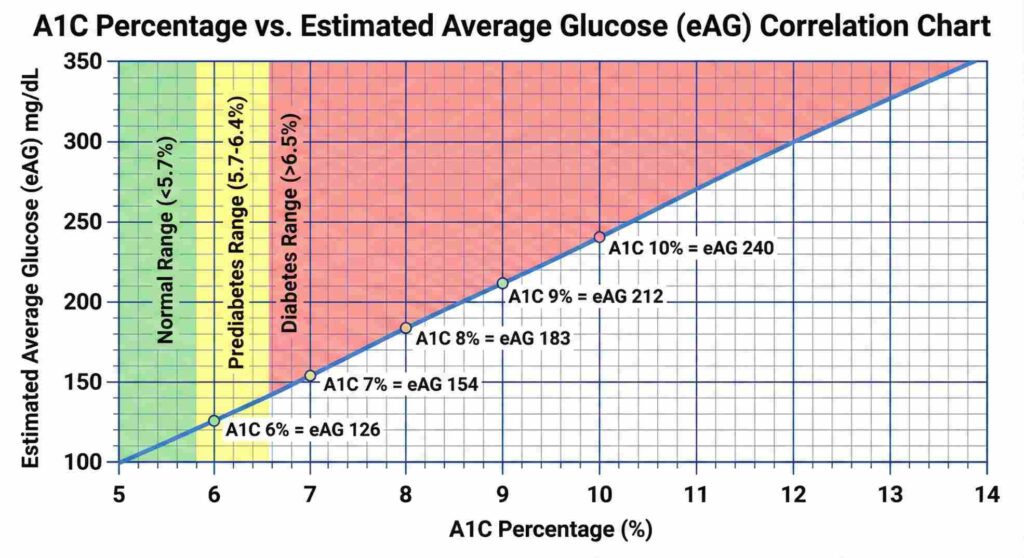
How it Works: Red blood cells live for about three months. Sugar likes to stick to them. The A1C test just counts how many of your red blood cells are sugar-coated.
Normal: Below 5.7%
Prediabetes: 5.7% – 6.4%
Diabetes: 6.5% or higher
The Insight: Dropping your A1C by just 1% can cut your risk of eye, kidney, and nerve damage by nearly 40%. That is a massive return on investment.
Watch Out For: Because this test looks at red blood cells, anything that messes with your blood count can skew the results. If you’re anemic, or if you’ve recently donated blood, your A1C might not be accurate.
2. Fasting Plasma Glucose (FPG)
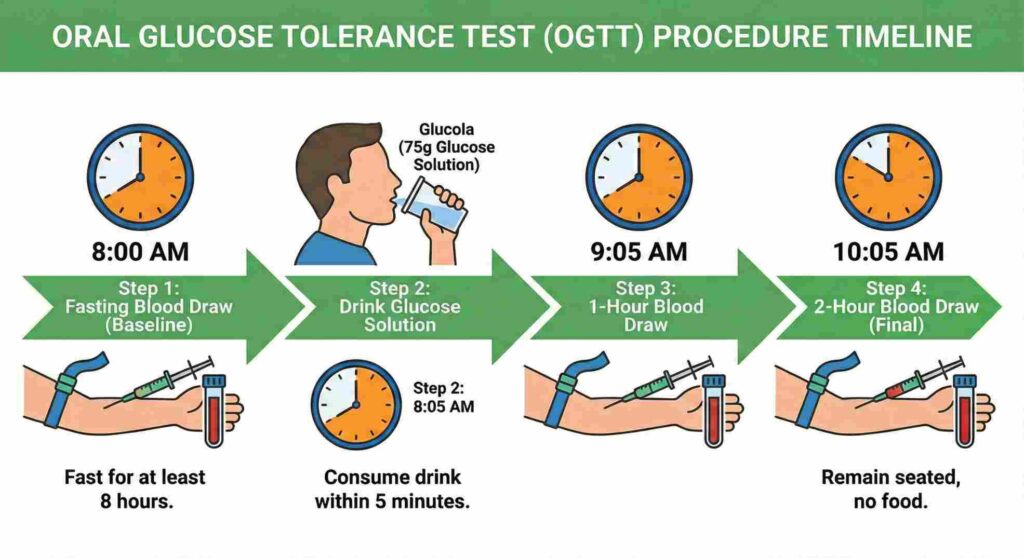
This is the standard “morning of your physical” test. You’ll be asked: “how many hours of fasting for fasting blood sugar?” The rule is at least 8 hours. Water is fine, but no coffee, no food.
What It Checks: This measures your body’s baseline. When you sleep, your liver releases a little bit of sugar to keep your brain working, and your pancreas releases just enough insulin to keep that sugar in check. If you wake up with high sugar (over 126 mg/dL), it means that balance is broken. Your liver is dumping too much fuel, and your pancreas can’t handle it.
Why It Matters: High fasting sugar is dangerous because it means your blood vessels are soaking in sugar all night long. This 24/7 exposure is a fast track to nerve damage.
3. Oral Glucose Tolerance Test (OGTT)
If the Fasting test is a resting heart rate check, this test is a treadmill sprint.
How It Goes:
You fast overnight.
You drink a syrupy drink called “Glucola” (75 grams of pure sugar).
They test your blood again two hours later.
The Ranges (2 Hours Later):
Normal: Below 140 mg/dL
Prediabetes: 140 – 199 mg/dL
Diabetes: 200 mg/dL or higher
Why Bother? Some people wake up with perfect blood sugar but spike dangerously high after every meal. The fasting test misses these people. The OGTT catches them. That’s why it’s always used for pregnant women to check for Gestational Diabetes.
4. Random Plasma Glucose
This is exactly what it sounds like. No fasting, no prep.
The Red Flag: If you test your blood at 3 PM on a Tuesday and it’s 200 mg/dL or higher, and you also feel thirsty, tired, or are peeing a lot—that’s almost certainly diabetes.
The Catch: A “normal” result here doesn’t mean you’re in the clear. You might have just gone six hours without eating. This test is great for catching obvious cases, but it’s terrible for ruling out early problems.
Comparison: Which Test Does What?
| Test Type | Normal | Prediabetes (Warning Zone) | Diabetes Diagnosis |
|---|---|---|---|
| A1C | Below 5.7% | 5.7% – 6.4% | 6.5% or higher |
| Fasting Plasma Glucose (FPG) | 99 mg/dL or below | 100 – 125 mg/dL | 126 mg/dL or higher |
| Oral Glucose Tolerance (OGTT) | 139 mg/dL or below | 140 – 199 mg/dL | 200 mg/dL or higher |
| Random Plasma Glucose | N/A | N/A | 200 mg/dL or higher (w/ symptoms) |
The “Big Three” Complications
When doctors talk about “diabetes complications,” they usually break them down into big vessel problems (heart) and small vessel problems. The small ones tend to show up first.
1. The Nerves (Neuropathy)
This hits about half of all people with diabetes. High blood sugar is toxic to your nerves, especially the long nerves that reach your toes.
What it feels like: A buzzing, tingling, or burning sensation in the feet. Eventually, it goes numb. This is dangerous because if you can’t feel your feet, you can’t feel a blister or a cut. That’s how infections start.
The Check: If your feet are tingling, ask “how to diagnose diabetes” immediately. An A1C test will tell you if sugar is the cause.
2. The Eyes (Retinopathy)
Your retina is like the film in a camera. It needs a lot of blood flow. When sugar clogs the capillaries there, they can swell and leak fluid.
What it feels like: Often… nothing. Until it’s too late. You might see floaters or blurry spots, but by then, the damage is severe.
The Check: You can have 20/20 vision and still be going blind from diabetes. You need a dilated eye exam to see it.
3. The Kidneys (Nephropathy)
Your kidneys are filters. High blood sugar forces them to work overtime, and the high pressure eventually blows out the filters.
The Early Sign: Protein leaking into your urine. This is why your doctor asks for a urine sample.
The Late Sign: Swollen ankles, fatigue, and high blood pressure.
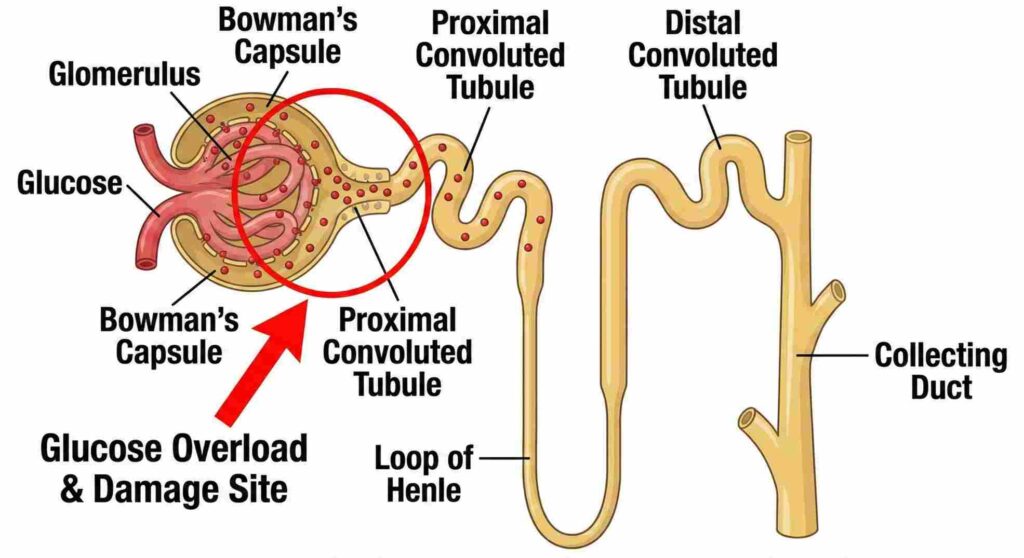
Table 2: The Numbers You Need to Know
| Test Type | Normal | Prediabetes (Warning Zone) | Diabetes Diagnosis |
|---|---|---|---|
| A1C | Below 5.7% | 5.7% – 6.4% | 6.5% or higher |
| Fasting Plasma Glucose (FPG) | 99 mg/dL or below | 100 – 125 mg/dL | 126 mg/dL or higher |
| Oral Glucose Tolerance (OGTT) | 139 mg/dL or below | 140 – 199 mg/dL | 200 mg/dL or higher |
| Random Plasma Glucose | N/A | N/A | 200 mg/dL or higher (w/ symptoms) |
The “Hidden” Signs
The “Big Three” get all the press, but high sugar affects everything.
Skin: Ever see dark, velvety patches on someone’s neck or armpits? That’s called Acanthosis Nigricans. It’s basically your skin screaming that your insulin levels are too high.
Hearing: High sugar damages the nerves in your ears, too. Hearing loss is twice as common in diabetics.
Brain Fog: Some researchers are starting to call Alzheimer’s “Type 3 Diabetes” because of the link between insulin resistance and memory loss.
Reading Your Results (Don’t Panic Yet)
So you got your results back and the numbers look off. Before you spiral, check these factors.
The “White Coat” Effect Nervous? Stress releases cortisol. Cortisol releases sugar. If you hate needles, your blood sugar might spike right before the draw, giving you a falsely high Fasting Glucose number.
Morning Spikes If you test at home and see high numbers at 6 AM, it might be the Dawn Phenomenon. Your body releases hormones to wake you up, which naturally raises blood sugar. In healthy people, insulin handles it. In prediabetics, it doesn’t.
Meds Matter Taking steroids for asthma or inflammation? Prednisone will send your blood sugar to the moon. Tell your doctor if you’re taking anything, or you might get a misdiagnosis.
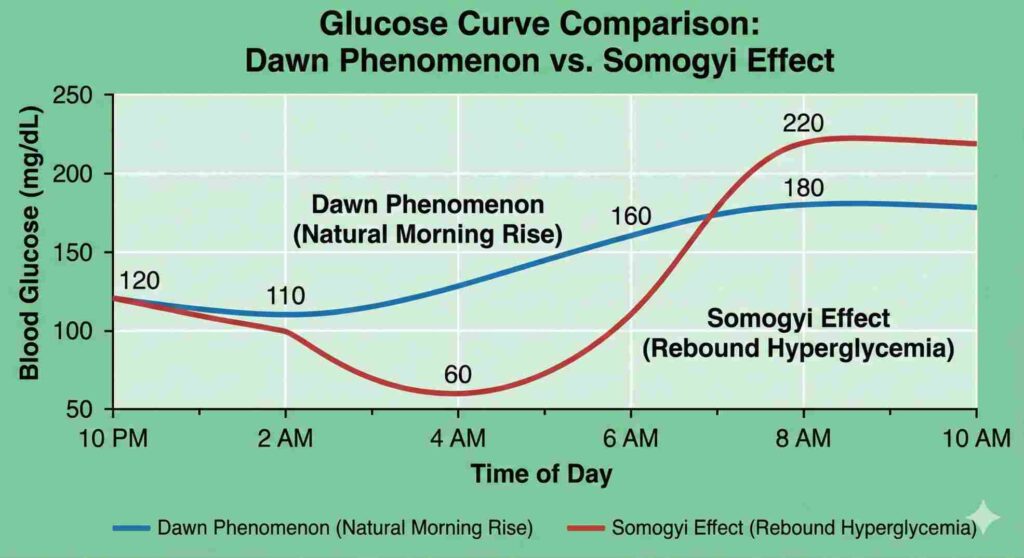
Table 3: Should You Get Tested?
| Risk Factor | The Details | What to Do |
|---|---|---|
| Weight | BMI > 25 (or >23 for Asian Americans) | Screen Immediately |
| Family | Parent or sibling has Type 2 | Screen Yearly |
| Age | 35 or older | Screen every 3 years |
| Lifestyle | Active less than 3 times a week | Start moving + Screen |
| History | Had Gestational Diabetes or PCOS | Screen every 3 years |
Getting Ready for Your Test
If you’re going in, do it right.
Hydrate: Drink water. Dehydration makes your veins hide and can concentrate your blood sugar, making it look higher than it is.
The Fast: If your appointment is at 9 AM, stop eating by midnight. No snacks.
Clean Hands: If you’re getting a finger prick, wash your hands. If you peeled an orange 20 minutes ago, that sugar on your skin will ruin the test.
Don’t Wait for the Symptoms
Here is the bottom line: You can fix a pipe that’s rusting. You can’t fix a pipe that’s already burst.
We have the technology to see inside your body and catch this years in advance. The American Diabetes Association confirms that early detection via the A1C and Fasting Glucose tests aren’t just medical procedures; they’re opportunities. They give you a chance to see the future and change it.
If you’re over 35, or you’re carrying a little extra weight, don’t wait for the thirst. Don’t wait for the numbness. Go to your doctor. Ask for the panel. Know your numbers.












Can I have diabetes complications if I feel totally fine?
Honestly, yes. That is the scariest part about this disease. You don’t wake up one day with nerve damage; it creeps up on you. Your blood sugar can be high enough to damage your blood vessels for 5 or even 10 years before you feel a single symptom. By the time you notice blurry vision or tingling toes, the damage is often already done. That’s why we don’t rely on how you “feel”—we rely on the numbers.
Can I drink coffee before a fasting blood sugar test?
It’s better not to. While some doctors say black coffee is fine, caffeine can trigger a small adrenaline rush in your body, which might dump a little sugar into your blood. If you want the most accurate number possible—and you do, because this is your health—stick to plain water for at least 8 hours before your appointment.
I checked my sugar with a friend's glucometer and it was high. Do I have diabetes?
Not necessarily. Home kits are great, but they aren’t perfect. If you had fruit juice on your finger, or if the test strips were old, you could get a false high reading. Also, if you just ate a big meal, your sugar should be higher. Don’t panic, but don’t ignore it either. Take that result to a doctor and get a real lab test to confirm it.
Is a random blood sugar test actually accurate?
It’s accurate for one thing: catching the obvious cases. If you test at 2 PM and get a 250 mg/dL, you almost certainly have a problem. But if you get a “normal” number like 110 mg/dL, it doesn’t prove you’re safe. You might have just gone a few hours without eating. It’s a good “red flag” test, but it’s terrible for giving you the “all clear.”
If my results show "Prediabetes," am I doomed?
No, you are actually lucky. Getting a prediabetes result is like seeing a “Bridge Out” sign while you still have time to hit the brakes. At this stage, your body is struggling, but the damage isn’t permanent yet. If you drop a little weight and start walking daily, you can often push those numbers right back into the normal range. It is the only diagnosis you can actually reverse.


Write a comment
Your email address will not be published. All fields are required