

Can Dexcom G7 Be Worn on Abdomen? A Comprehensive Guide (2026 Update)

Living with diabetes is a constant series of adjustments. You adjust your insulin, you adjust your diet, and you adjust your mindset. But when technology changes, sometimes the adjustments feel less like progress and more like a hurdle. If you are one of the millions of people who recently upgraded from the G6 to the G7, you likely hit a snag the moment you opened the box.
For years, we slapped our sensors on our stomachs without a second thought. It was the “home base” for diabetes management. But the G7 instructions in the US threw a curveball: the arm is now the only approved site for adults. This shift has triggered a massive wave of confusion, leading almost every new user to ask the same critical question: can Dexcom G7 be worn on abdomen?
It sounds like a simple yes or no question, but the reality is layered with FDA regulations, biological nuances, and practical lifestyle hacks. If you strictly follow the manual, the answer is no. If you listen to real-world experience and international guidelines, the answer is a resounding yes.
In this massive, comprehensive guide for DME Devices, updated for the reality of 2026, we are not just going to answer can Dexcom G7 be worn on abdomen—we are going to explain how to do it safely, why you might want to, and exactly what to expect when you move your sensor south. We will cover everything from skin prep to airport security, ensuring you have the confidence to make the right choice for your body.
The Regulatory Maze: Why the Rules Changed
To understand the complex answer to can Dexcom G7 be worn on abdomen, you have to understand the difference between “unsafe” and “unapproved.” These are not the same thing.
In the medical world, a device is “approved” for a specific use only if the manufacturer submits mountains of data for that specific use. When Dexcom designed the G7, they were in a race to prove it was the most accurate sensor in history. Their clinical trials found that the back of the upper arm provided the cleanest, most consistent data with the least amount of “noise.”
So, they submitted that arm data to the FDA. The FDA looked at the data and approved the device for the arm. Because Dexcom did not submit a massive dataset regarding whether can Dexcom G7 be worn on abdomen in that initial US filing, the FDA label does not include it.
However, if you cross the Atlantic to Europe or go north to Canada, the regulators there looked at the total body of evidence and decided that can Dexcom G7 be worn on abdomen was a question with a positive answer. In those regions, the abdomen is a fully approved site. This geographical discrepancy proves that the issue isn’t about whether the device works on the stomach—it clearly does—but rather about which paperwork was filed in which country.
The Biological Reality: Arm vs. Abdomen
When patients ask their endocrinologists, “can Dexcom G7 be worn on abdomen?”, the doctor usually weighs the biological pros and cons. The body is not a uniform block of wood; different tissues behave differently.
A Continuous Glucose Monitor (CGM) measures interstitial fluid—the liquid that sits between your cells. It does not measure blood. When you eat a bagel, glucose enters your blood first, then leaks out into the interstitial fluid. This process takes time, creating a “lag.”
The Arm Advantage: The tissue on the back of the arm is generally firm and has brisk blood flow. This minimizes the lag time. The sensor wire sits in a stable environment, which is why the G7 gets its famous MARD (accuracy) score of ~8.2% on the arm.
The Abdomen Factor: The abdomen is softer. It has more adipose tissue (fat), and that tissue is deeper. Glucose takes a little longer to diffuse through these deep fatty layers. So, when you ask can Dexcom G7 be worn on abdomen, you are essentially asking if you can tolerate a slightly longer lag time—usually about 1 to 2 minutes more than the arm.
For 99% of your day, this difference is invisible. A reading of 120 mg/dL on the arm might show up as 118 mg/dL on the abdomen. You would treat it the exact same way. The only time the answer to can Dexcom G7 be worn on abdomen becomes complicated is during extreme rapid changes, which we will discuss later.
Why Users Are Rejecting the Arm
If the arm is faster, why is everyone asking can Dexcom G7 be worn on abdomen? Why not just follow the rules?
The answer lies in “The Burden of Wear.” Diabetes technology is something you wear 24 hours a day, 7 days a week, 365 days a year. It cannot hurt, it cannot annoy you, and it cannot keep you awake. For many, the arm fails these tests, leading them to investigate whether can Dexcom G7 be worn on abdomen as an alternative.
1. The “Compression Low” Crisis If you are a side sleeper, the arm is a nightmare. You roll over, the weight of your head presses the sensor into the mattress, and the fluid is squeezed away from the wire. The sensor reads this as a sudden drop to 50 mg/dL and triggers a screaming alarm at 3 AM. You wake up in a panic, check your finger, and you are fine. This happens constantly with arm wear. Asking can Dexcom G7 be worn on abdomen is often a desperate plea for a good night’s sleep. On the stomach, side sleepers are safe.
2. The Doorframe Magnet There is a universal truth in the diabetes community: if you wear a sensor on your arm, you will eventually slam it into a doorframe. It hurts, it bleeds, and it rips the expensive device right off your skin. The profile of the G7 is lower than the G6, but it still catches. The abdomen is protected by your torso. You rarely belly-flop into doorframes. This durability is why active users frequently verify can Dexcom G7 be worn on abdomen before choosing their site.
3. Social Discretion In the summer, short sleeves are a must. For many people, having a medical device visible on their arm leads to unwanted questions from strangers (“Is that a nicotine patch?”, “Are you a cyborg?”). By verifying that can Dexcom G7 be worn on abdomen, users reclaim their privacy. The sensor disappears under a shirt, and nobody needs to know you are managing a chronic condition unless you choose to tell them.
Accuracy Comparison: The Data Breakdown
Let’s get into the weeds. If you decide that can Dexcom G7 be worn on abdomen is right for you, what kind of performance sacrifice are you making?
We looked at user reports and post-market studies to compare the two sites directly to see if the answer to can Dexcom G7 be worn on abdomen is backed by data.
| Metric | Arm Placement (US Official) | Abdomen Placement (User Preferred) |
|---|---|---|
| MARD Score (Accuracy) | ~8.2% (Gold Standard) | ~9.1% (Excellent). The difference is statistically real but practically negligible for daily dosing. |
| Lag Time | Fastest reaction to blood sugar changes. | Slightly slower (1-3 minutes lag). This is the main trade-off when determining if can Dexcom G7 be worn on abdomen works for you. |
| Adhesion Longevity | High. Skin is taut and doesn’t fold. | Moderate. Stomach folds when sitting can lift edges. Requires better prep. |
| Comfort | Low for side sleepers. High visibility. | High comfort. High privacy. Best for sleep. |
The data clearly shows that while the arm wins on pure speed, the abdomen wins on lifestyle. The fact that the accuracy difference is less than 1% is the main reason European regulators decided the answer to can Dexcom G7 be worn on abdomen should be “yes.”
Step-by-Step: How to Apply G7 to the Abdomen
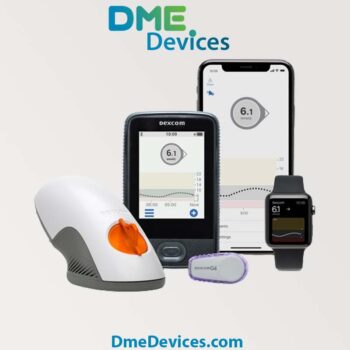
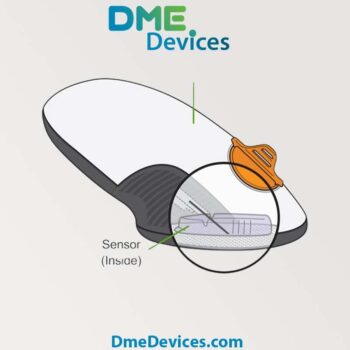
If you have decided to move your sensor, you need to change your technique. The G7 applicator is different from the G6. It is a single-push device that requires a firm surface. Your stomach is soft. This mismatch is why people fail when testing can Dexcom G7 be worn on abdomen.
Here is the master class on answering can Dexcom G7 be worn on abdomen with a successful insertion.
Step 1: The Location Scout
Do not just pick a random spot.
Avoid the Navel: Stay 3 inches away from your belly button.
Avoid the Belt Line: Sit down. See where your pants dig in? Do not put it there.
Avoid Scar Tissue: If you have “lumps” from years of insulin injections, stay away. Scar tissue doesn’t absorb fluid well, leading to “Sensor Error” messages.
Step 2: The Deep Clean
Stomach skin is oily and sweaty.
Scrub with an alcohol wipe.
Wait. Let it dry completely. If you blow on it, you are just spitting bacteria onto the site. Let it air dry.
Optional: Apply a barrier like Skin Tac. Create a “donut” shape—sticky on the outside, clean in the middle where the needle goes.
Step 3: The Pinch (Critical!)
This is the most important part of answering can Dexcom G7 be worn on abdomen successfully.
Place the applicator on the skin.
Use your free hand to pinch up the skin around the applicator. You are trying to turn your soft belly into a firm surface.
If you cannot pinch, press the applicator down firmly into your torso.
Push the button.
Step 4: The 10-Second Hold
After you push the button, do not yank the applicator away. Hold it there for 10 seconds. This allows the adhesive to wet out and bond to the skin before you move.
Step 5: The Overpatch
On the arm, the overpatch is optional for some. On the abdomen, it is mandatory. Your stomach moves too much. Apply the overpatch immediately, smoothing it down to prevent wrinkles.
Body Types and Weight: Does It Matter?
A common follow-up when people ask can Dexcom G7 be worn on abdomen is, “What if I am too skinny?” or “What if I am plus-sized?”
For Lean Individuals: If you have very low body fat (visible abs), the abdomen can be tricky. The G7 wire is short, but if you have zero fat, it can irritate the muscle wall. In this case, you must pinch the skin up during insertion to pull the skin away from the muscle. If you verify that can Dexcom G7 be worn on abdomen but find it painful, try the upper buttocks or the fleshy part of the hip/flank.
For Plus-Sized Individuals: The abdomen is often an excellent site because of the deep fatty tissue. However, deep folds can be an issue. Moisture (sweat) gets trapped in skin folds, which destroys adhesive and breeds bacteria. If you are placing it here, ensure you are on a “hill” (a flat, outward-facing area) and not in a “valley” (a crease). Using an antiperspirant on the skin before the sensor (let it dry first!) can be a game-changer for longevity when you determine can Dexcom G7 be worn on abdomen.
Travel and Security: The Airport Question
When you travel, you are out of your routine. You might wonder, “can Dexcom G7 be worn on abdomen through airport security?”
Yes. In fact, it is often easier.
Body Scanners: The TSA body scanners (the ones where you put your hands up) will see the sensor regardless of where it is. If it is on your stomach, you can easily lift your shirt to show the agent what it is. On the arm, it is sometimes under layers of sleeves that are hard to roll up.
Pat Downs: If you opt for a pat-down, telling the agent “I have a medical device on my stomach” is standard procedure.
Privacy: If you are worried about staring, the answer to can Dexcom G7 be worn on abdomen provides a solution—it keeps the device hidden while you wait in the security line, unlike the arm which might be exposed.
Pregnancy and the G7 Abdomen Question
Pregnancy brings a whole new set of challenges for diabetes management. Pregnant women often ask, “can Dexcom G7 be worn on abdomen while I am expecting?”
As the belly expands, the skin stretches and becomes taut. This actually creates a very firm surface for the sensor, which is good for accuracy. However, as the pregnancy progresses to the third trimester, the skin may become too tight, or the baby may kick right where the sensor is. Most pregnant users successfully use the abdomen during the first and second trimesters. By the third trimester, many switch to the back of the arm or the upper thigh simply because the skin on the stomach is under so much tension that the adhesive tends to pop off. Always consult your OB/GYN or Endo regarding the question can Dexcom G7 be worn on abdomen during pregnancy.
Troubleshooting: When the Stomach Site Acts Up
Even if you successfully answer can Dexcom G7 be worn on abdomen with a “yes,” you might run into issues. Here is how to fix them.
Issue 1: The “Jump” You look at your graph and the line is jagged. It jumps from 100 to 120 to 90.
Cause: The sensor wire is likely loose in the soft tissue.
Fix: Press down firmly on the adhesive patch to re-seat it. If it continues, calibrate with a fingerstick.
Issue 2: Early Failure (Day 7 or 8) The sensor simply stops working or peels off before Day 10.
Cause: Usually friction from waistbands or seatbelts.
Fix: Look at where your seatbelt crosses your torso. If you place the sensor in the path of the seatbelt, it will get ripped off. Adjust your placement higher or lower.
Issue 3: Pressure Lows (Stomach Sleepers) We talked about side sleepers loving the abdomen. But if you sleep on your stomach, asking can Dexcom G7 be worn on abdomen might lead to the same “compression low” problem.
Fix: If you are a stomach sleeper, you need to place the sensor far out on the “flank” (the love handle area) rather than the center of the belly, so it doesn’t take your full body weight.
Seasonal Challenges: Winter Layers vs. Summer Sweat
The answer to can Dexcom G7 be worn on abdomen might change with the seasons.
Winter: The abdomen is king in winter. When you are wearing a long-sleeve shirt, a sweater, and a coat, digging down to your arm to check a sensor or prevent a compression low is a nightmare. The abdomen is tucked away and warm. However, be careful with “dry skin itch.” Winter skin is dry, and removing adhesive can be more painful. Use baby oil or an adhesive remover (like Unisolve) to take the sensor off gently.
Summer: The abdomen can be tricky in high heat. If you sweat heavily, it tends to pool around the waistline and under the stomach folds. This can dissolve the adhesive from the inside out.
The Fix: If you are asking can Dexcom G7 be worn on abdomen in July, you need antiperspirant. Swipe a stick of unscented antiperspirant on the skin (avoiding the exact needle spot) before applying the sensor. This keeps the skin dry under the tape.
The Automated Insulin Delivery (AID) Warning
We need to pause for a serious note. Many people today use their G7 connected to an insulin pump (like the Tandem t:slim X2 or Insulet OmniPod 5). These systems use the CGM value to automatically increase or decrease insulin.
When you ask can Dexcom G7 be worn on abdomen while using an AID system, the stakes are higher. The algorithm in your pump was trained on the “arm data.” It expects the rapid reaction time of the arm. If you use the abdomen, the sensor might report a rise in glucose 5 minutes later than the arm would. This means your pump starts increasing insulin 5 minutes late. Conversely, if you are dropping, the pump might cut off insulin a few minutes later than ideal.
Does this mean you can’t do it? No. Thousands of loopers use abdominal sites successfully. But you need to be aware. You might need to set your “Low Alert” slightly higher (e.g., 80 mg/dL instead of 70 mg/dL) to buy yourself that extra buffer time that the abdominal lag eats up. Always—always—discuss pump settings with your doctor when asking can Dexcom G7 be worn on abdomen.
Cost, Insurance, and Replacements
Let’s talk money. If you try to answer can Dexcom G7 be worn on abdomen and the sensor fails, are you out $100?
Dexcom has a replacement program for failed sensors. However, the form asks “Where was the sensor inserted?” If you are in the US, the drop-down menu might flag “Abdomen” as an unapproved site.
The Reality: Most users report that Dexcom support is lenient. They understand that users utilize different sites. However, technical support is required to remind you of the approved sites.
The Strategy: Be honest, but be aware. If you are constantly having failures on the abdomen, Dexcom may eventually tell you to stop using that site or they will stop sending replacements. If you verify that can Dexcom G7 be worn on abdomen works for you, but you have one bad sensor, they will likely cover it.
The Verdict: 2026 and Beyond
We are living in an era of patient empowerment. The question can Dexcom G7 be worn on abdomen is more than just a technical query; it is about taking control of your own health management.
While the FDA label remains stuck on the arm for adults in the US, the global consensus, the clinical data, and the lived experience of millions of users points to a different truth. The abdomen is a safe, effective, and often superior location for the Dexcom G7.
It allows you to sleep. It allows you to dress how you want. It keeps your device safe from doorframes. And yes, it gives you accurate numbers that you can trust to dose insulin. The decision of whether can Dexcom G7 be worn on abdomen ultimately comes down to your personal needs.
The key is simply acknowledging the trade-offs. You accept a tiny bit of extra lag time in exchange for massive gains in comfort and lifestyle. You accept the need for a little extra skin prep in exchange for getting your sleep back.
So, the next time someone asks, “can Dexcom G7 be worn on abdomen?”, you can tell them: “Yes, it can. And for me, it’s the best place for it.”
Diabetes is hard enough without fighting your own equipment. Find the spot that works for your body, secure it well, and get back to living your life.
If you are ready to stock up on sensors to start your new site rotation strategy, or if you simply need the most reliable supplier to help you answer can Dexcom G7 be worn on abdomen with the right gear, click the button below.
Hot
Hot

Hot


Hot





Write a comment
Your email address will not be published. All fields are required