

Why Your Sensor Keeps Falling Off
You know the feeling. You’re three days into a fresh Freestyle Libre sensor, you walk through a doorway, barely brush the frame, and rip. There goes $75 worth of medical gear, hanging by a thread or lying on the floor.
If you’ve lived with Type 1 or Type 2 diabetes for more than a month, you know this specific kind of panic.
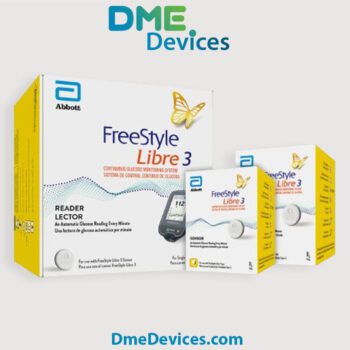
Technically, we know exactly how long FreeStyle Libre 3 sensors are good for (up to 14 days), but achieving that full lifespan often requires battling sweat, friction, and gravity.
Most people think the glue on the sensor itself is bad. But that’s not really the issue. The real problem is usually micro-movement. When your arm muscle flexes, your skin stretches, but the hard plastic sensor doesn’t. That constant tug-of-war weakens the bond until—pop—it gives up.
You don’t need stronger glue; you need an anchor that moves with you.
After scouring forums, testing in saltwater, and reading hundreds of r/FreestyleLibre threads, we found the specific patches that actually keep a Libre 2 or 3 attached for the full two weeks.
The Top 3 Patches (That Won’t Rip Your Skin Off)
We cut through the noise to find the three that matter. These aren’t just stickers; they are structural supports for your device.
1. Skin Grip: The Heavy Lifter
Best For: Gym-goers, heavy sweaters, and anyone who knocks into furniture.
If you ask around in any diabetic Facebook group, Skin Grip is usually the first name dropped. It lives up to the hype for one specific reason: the material.
It uses a rayon and spandex blend that stretches four ways. Think of it like high-end yoga pants for your arm. When your bicep flexes, the patch stretches with it instead of pulling against the sensor. This relieves that tension we talked about earlier.
- The Good: It survives daily showers and stays put for 10-14 days.
- The Bad: It’s so sticky that taking it off can hurt if you don’t use baby oil.
- Verdict: If you want it to never move, this is the one.
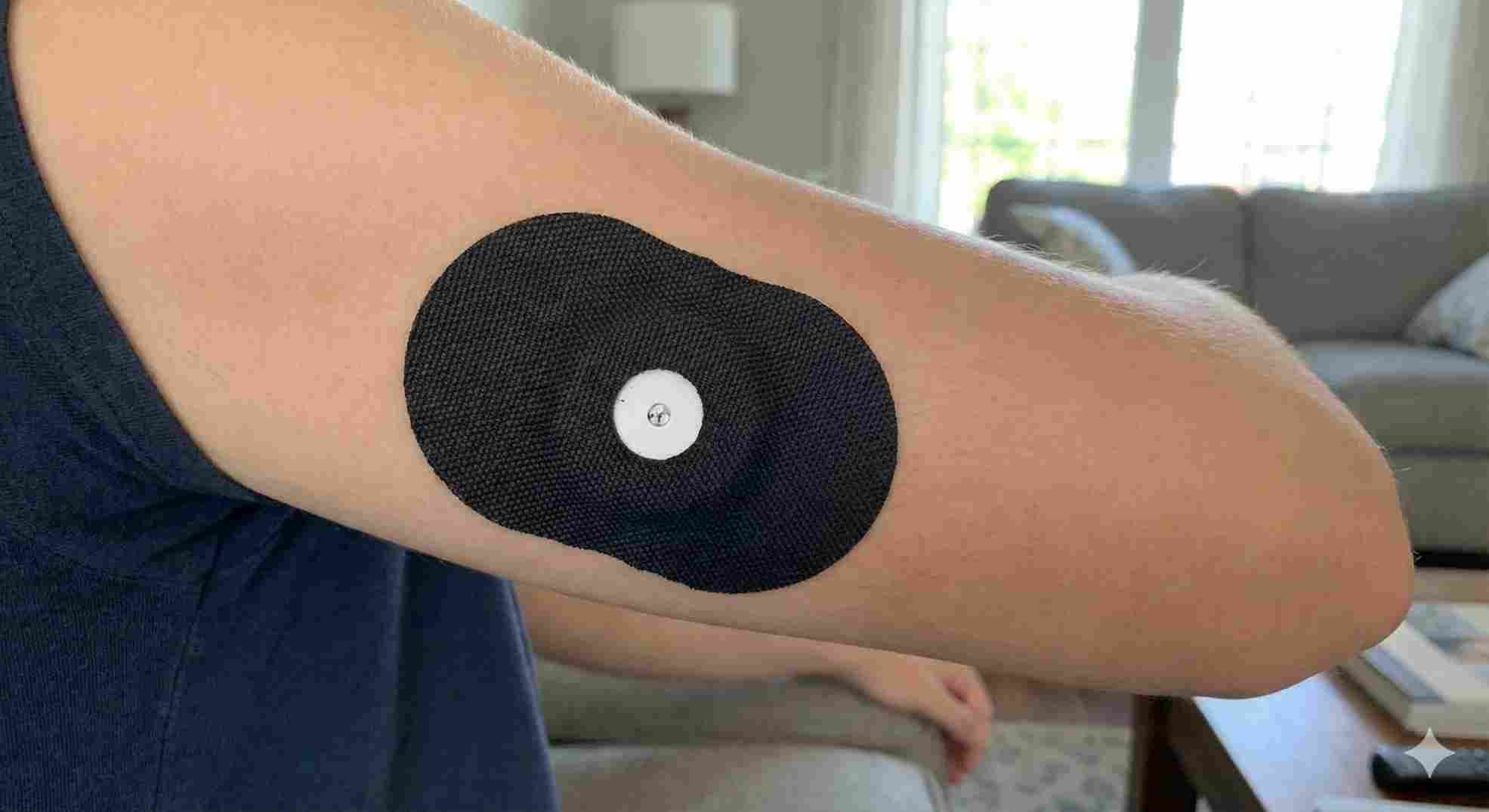
2. Not Just a Patch (NJaP): The Smart Design
Best For: Swimmers and people with sensitive skin.
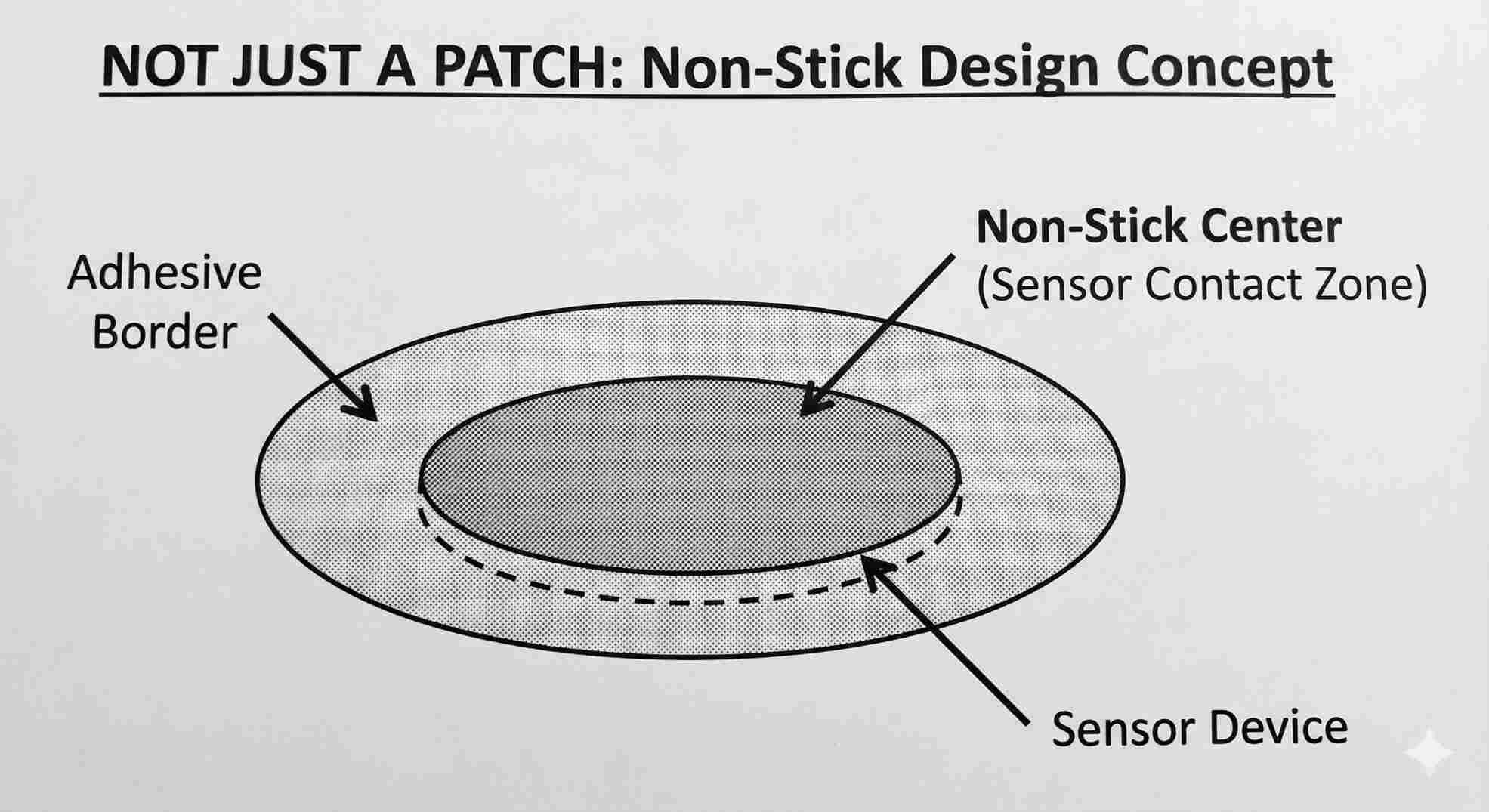
This brand did something clever. They realized that sticking glue directly onto the plastic sensor makes a mess. So, they designed a “Non-Stick Center.”
The middle of the patch (the part that covers the Libre) has no glue. The adhesive only touches your skin around the outside.
Why does this matter? If the edges of your patch start looking gross after a week, you can peel the whole thing off and slap on a fresh one without accidentally ripping your sensor out. You can’t do that with full-adhesive patches.
- The Good: You can change the patch mid-cycle. It breathes well.
- The Bad: It costs a bit more per patch.
- Verdict: The safest bet if you like to change your patch weekly.
3. Fixic: The Value Pick
Best For: People paying out of pocket.
Diabetic supplies destroy bank accounts. If you aren’t looking for bells and whistles and just want something that works, Fixic is the answer.
They sell in bulk, and the cost per patch is significantly lower than the big brands. They offer a waterproof, clear plastic option (TPU) that feels a bit like a second skin, or a standard fabric option.
- The Good: Incredible value. The plastic version is totally waterproof.
- The Bad: It doesn’t breathe as well as the fabric options, so it might get itchy in high heat.
- Verdict: Perfect for stocking up on a budget.
Comparison: Breaking Down the Specs
Here is how the top contenders stack up against each other.
Table 1: Durability & Material
| Brand | Material Type | Stretchy? | Waterproof? | Real Wear Time |
|---|---|---|---|---|
| Skin Grip | Rayon/Spandex | Yes (Very) | Yes | 10-14 Days |
| NJaP | Cotton/Spandex | Yes | Yes | 7-10 Days |
| Fixic | Plastic or Fabric | Sort of | Yes | 10-14 Days |
Table 2: Comfort & Skin Safety
| Brand | Hypoallergenic? | Latex Free? | Itch Factor (1-10) | Good for Eczema? |
|---|---|---|---|---|
| Skin Grip | Yes | Yes | Low (1/10) | Yes |
| NJaP | Yes | Yes | Very Low (0/10) | Best Pick |
| Fixic | Yes | Yes | Medium (3/10) | Maybe |
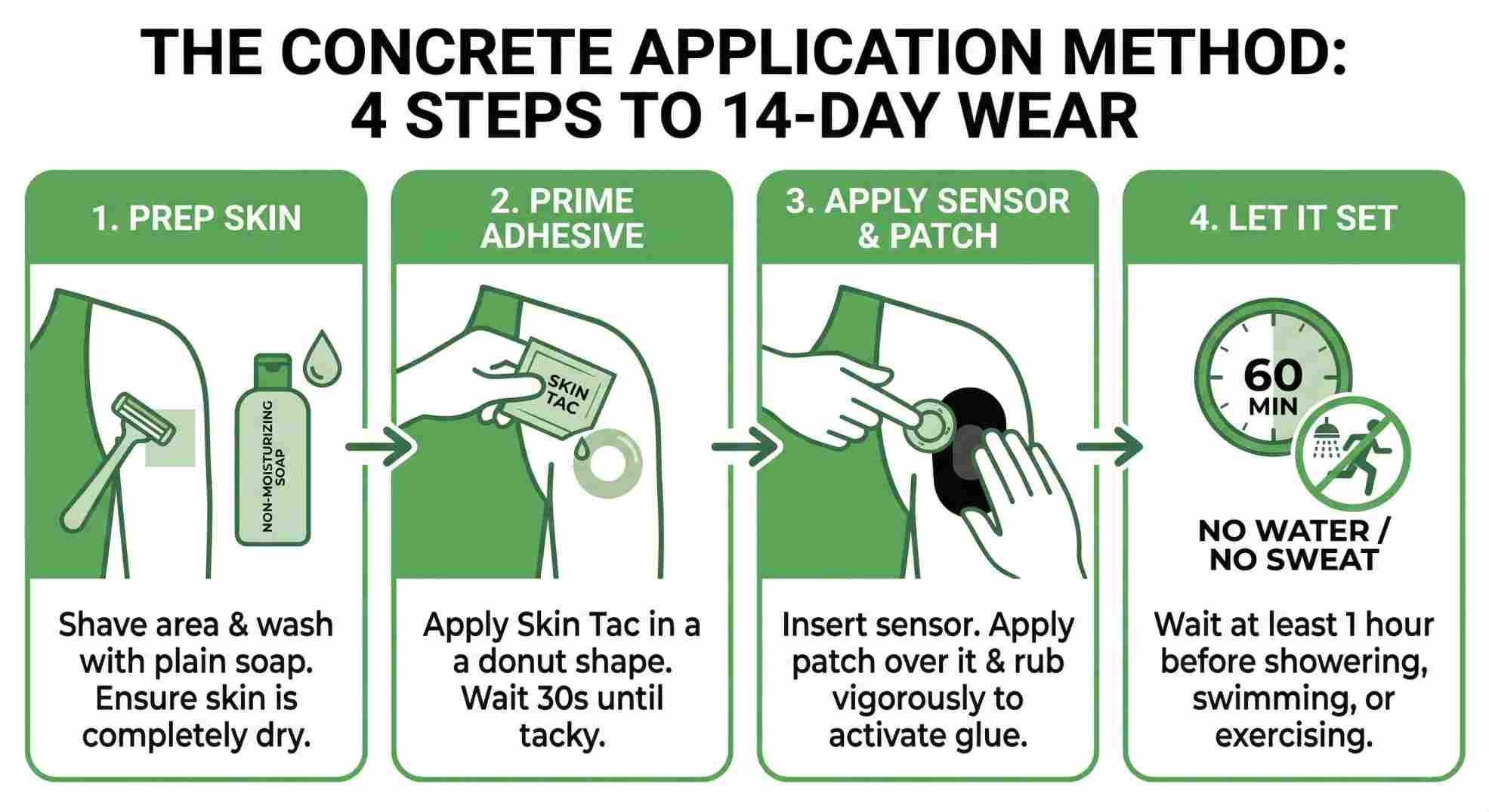
The “Concrete” Method: How to Apply It
Buying the best adhesive for Freestyle Libre is pointless if you put it on greasy skin. Even industrial superglue won’t stick to body oil.
Here is the exact routine veteran users follow to get 14 days of wear:
- Shave the Spot: Seriously. Even if you think your arm is hairless, “peach fuzz” lifts the glue off your skin. Shave a small square.
- Use Dish Soap: Don’t use Dove or moisturizing body wash. The oils in those prevent sticking. Use plain dish soap or an alcohol wipe to strip the oil.
- Wait for it to Dry: Let the alcohol dry completely.
- The Secret Sauce (Skin Tac): This is the step most people skip. Buy a wipe called Skin Tac. Wipe it on your skin in a donut shape (don’t touch the spot where the needle goes). Let it get sticky for 30 seconds.
- Stick and Rub: Apply the sensor, then the patch. Rub the patch vigorously. The friction creates heat, which activates the glue.
- The One Hour Rule: Do not shower or get sweaty for at least one hour. The bond needs time to set.
Quick Troubleshooting
“It itches like crazy!”
This sucks, but it happens. It’s often sweat trapped under the glue.
- Fix: Try putting a layer of Tegaderm or a hydrocolloid bandage on your skin first, then put the sensor on top of that. It acts as a shield between your skin and the acrylic glue.
“The edges are peeling up.”
- Fix: Don’t rip it off yet. Trim the peeling edges with nail scissors and glue the loose ends back down with a tiny dab of skin glue (like Torbot) or just put a new patch over the old one if using NJaP.
Wrap Up
You shouldn’t have to plan your life around keeping a sensor attached. Whether you go with the rugged Skin Grip or the clever Not Just a Patch, the trick is all in the prep work. Shave, clean, and let it set.
Don’t wait until you lose another sensor. Grab a pack and lock that thing down.


Can I swim with these patches?
Yes. Skin Grip and Not Just a Patch love the water. If you swim in the ocean, rinse the salt off afterwards. Saltwater breaks down glue faster than chlorine.
Does insurance pay for this?
Usually, no. Insurance covers the sensor, but they think the patch is a “lifestyle choice.” You can usually use your HSA or FSA card to buy them, though.
How do I get the sticky gunk off my arm?
Don’t scrub it raw. Use an adhesive remover wipe like Uni-Solve or TacAway. If you don’t have those, soak a cotton ball in baby oil or coconut oil and let it sit on the gunk for 5 minutes. It’ll wipe right off.
Does the patch block the signal?
Nope. Your phone or reader can scan right through the fabric. It doesn’t affect the Bluetooth range either.



Write a comment
Your email address will not be published. All fields are required