
You are staring at your scanner screen at 2 AM. Your heart is racing. You wonder: is this thing actually right? You do a quick finger prick, the numbers do not match at all, and panic sets in. It happens all the time. The accuracy of freestyle libre sensors drives people crazy when they do not understand what the device is actually measuring.
Relying on medical equipment should not feel like a guessing game. When you are making snap decisions about insulin, you need facts. You need to know that an alarm means business. We hear this exact frustration constantly at DME Devices. A customer will call us, completely exhausted, asking if their sensor is broken because the number doesn’t match their blood meter. Caregivers cannot operate on zero sleep because of false alerts.
Let’s fix that right now. We will look at exactly how these monitors pull your numbers, why they sometimes differ from blood tests, and what you can actually do to get readings you trust.
The 15-Minute Rule You Need to Know
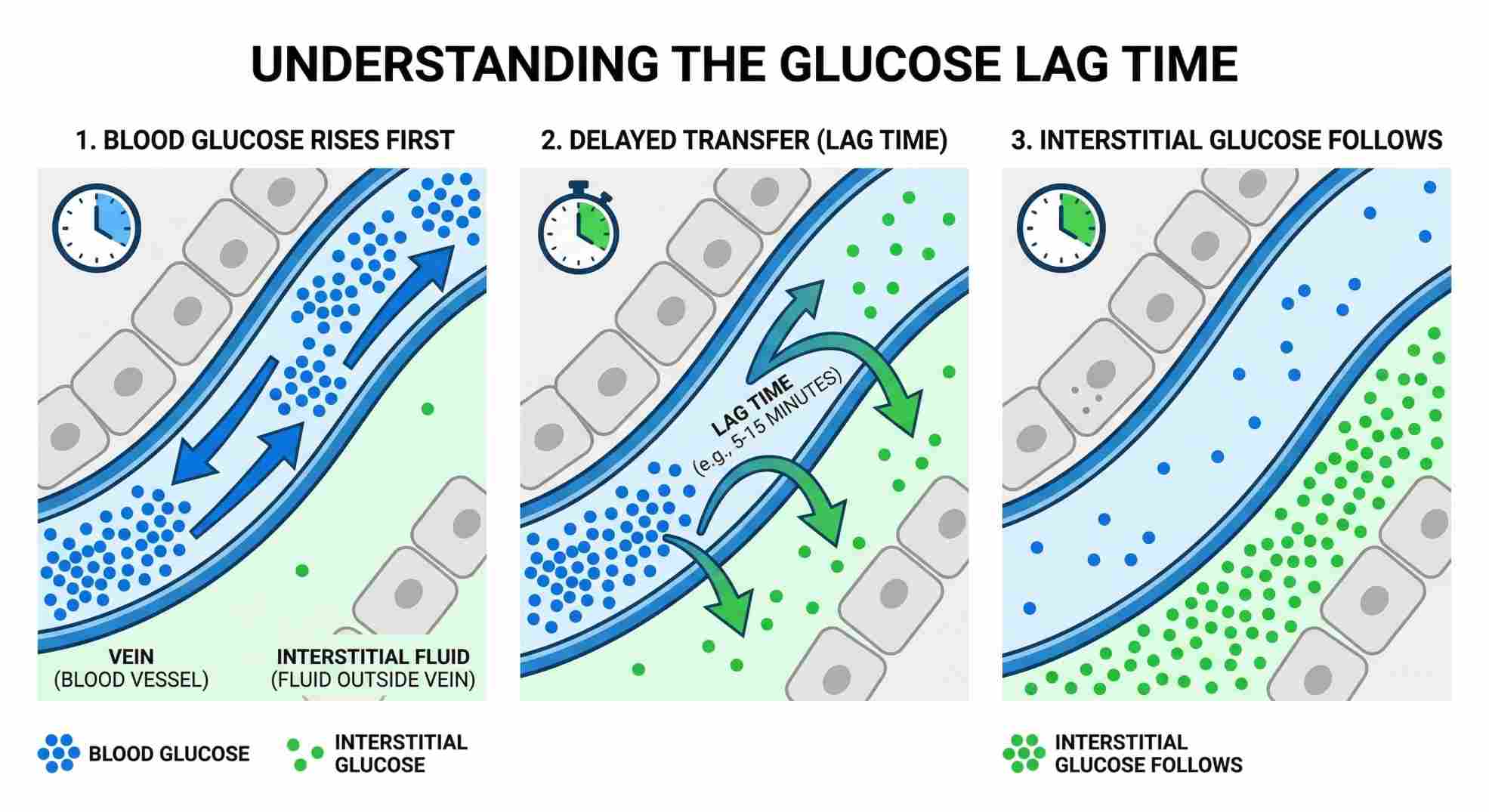
Here is the single biggest secret you need to know. Your arm sensor never touches your blood. It reads interstitial fluid.
Think of your blood sugar like a train. The locomotive at the very front is your blood. The caboose at the back is your interstitial fluid. When the train speeds up and climbs a hill after a heavy meal, the locomotive gets there first. The caboose takes about 10 to 15 minutes to catch up.
So, if your sugar is dropping fast, your finger prick (the locomotive) will show it before your arm sensor (the caboose) does. That is not a broken machine. That is just human biology. Understanding this delay will save you a lot of unnecessary finger pricks.
 What Does “Accurate” Actually Mean?
To answer the question, is freestyle libre accurate, we look at a grade called MARD.
MARD stands for Mean Absolute Relative Difference. Do not let the math term scare you. It is just a percentage that tells you how far off a sensor is from a lab-quality blood test. Lower is always better. If a device has a MARD of 10%, its reading is usually within 10% of your actual blood sugar.
The FDA generally wants a score under 10% before they let you use a sensor to dose insulin without a backup fingerstick.
| CGM Model | Average MARD Score | FDA Approved for Dosing Insulin? | Notes for Patients |
|---|---|---|---|
| FreeStyle Libre 14-Day | ~9.4% | Yes | The original standard. Highly dependable for stable blood sugars. |
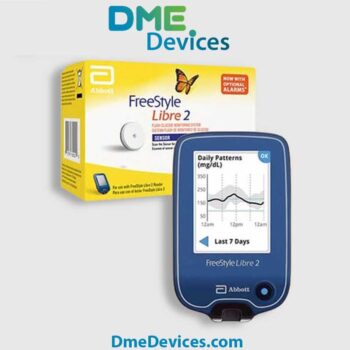
| FreeStyle Libre 2 | ~9.2% (Adults) | Yes | Added optional alarms for highs and lows. Better low-end accuracy. |
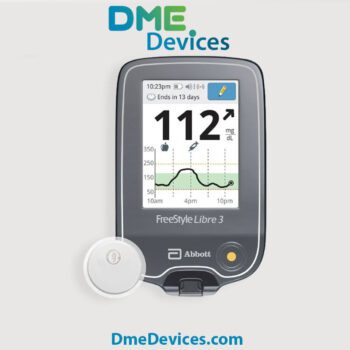
| FreeStyle Libre 3 | ~7.9% | Yes | The smallest sensor currently available with the most precise tracking data. |
| Traditional Fingerstick | ~5.0% to 10.0% | Yes | Still the gold standard, but subject to user error (dirty hands). |
The numbers do not lie. The accuracy of freestyle libre sensors easily meets the safety standards for making medical decisions.
Taking a Closer Look: how accurate is freestyle libre 2?
When folks upgrade their system, the first thing they ask is: how accurate is freestyle libre 2 compared to my old one?
The Libre 2 added alarms, which is great. But an alarm is useless if the sensor is wrong. This model really shines when your blood sugar drops below 70 mg/dL. That is the danger zone. They built the Libre 2 to be highly sensitive in those low ranges, which means fewer fake alarms waking you up in the middle of the night.
 The 24-Hour Weirdness
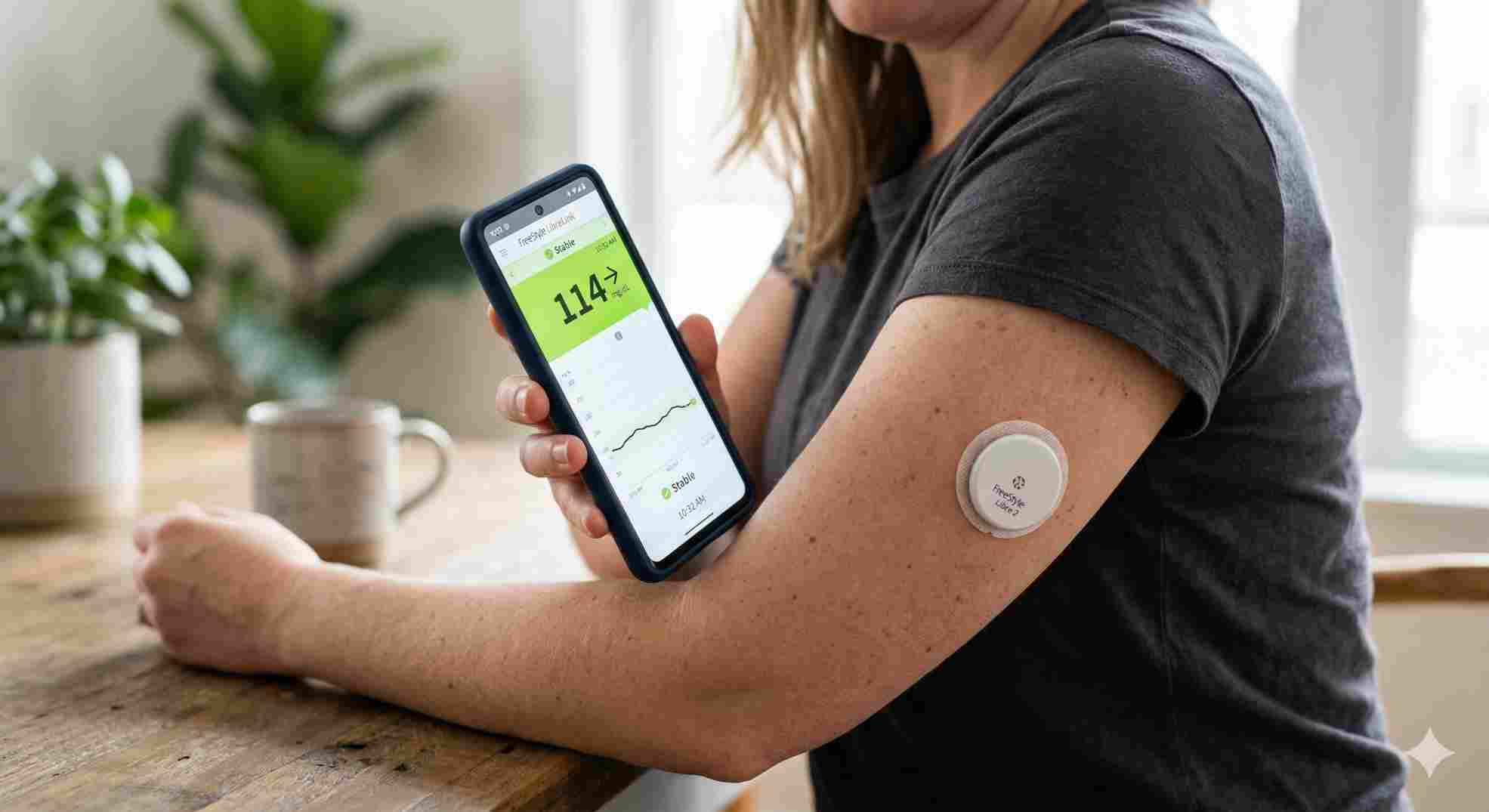
When you stick that tiny wire under your skin, your body gets angry. It treats it like a splinter. Your immune system causes a tiny bit of inflammation right at the site.
For the first 12 to 24 hours, the numbers might bounce all over the place. Your sensor says 85. Your blood says 120. Do not panic. The system gets much more reliable after that first day once your arm calms down and gets used to the wire.
Daily Life vs. Lab Data
Lab numbers look great on paper. But you do not live in a lab. You live in your house, you go to the gym, and you sleep. Several normal things can mess with the accuracy of freestyle libre on any given Tuesday.
1. Sleeping on Your Arm
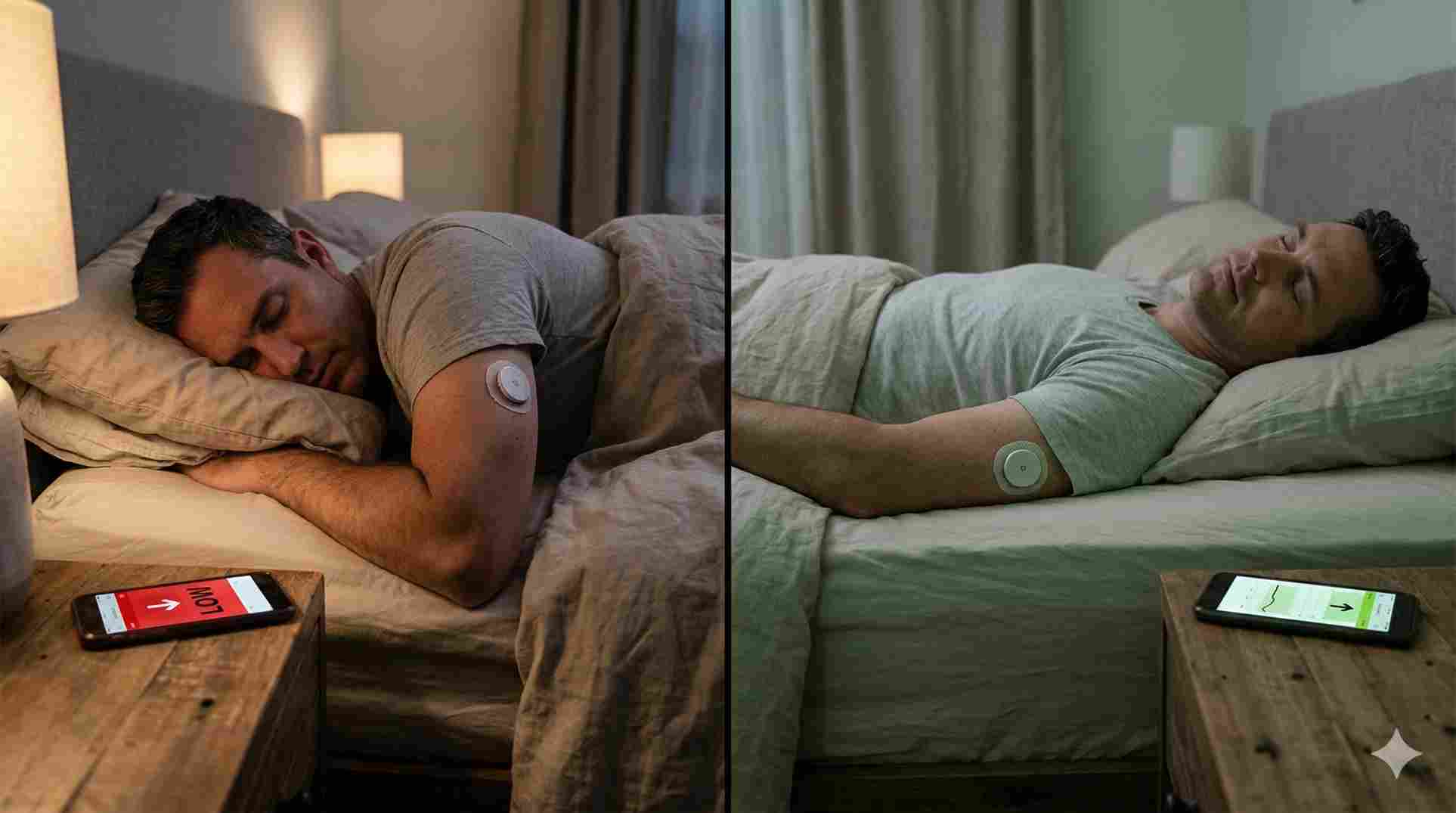
Ever wake up to a blaring low alarm, check your finger, and find you are sitting pretty at 95 mg/dL? You just had a compression low.
If you sleep hard on your arm, you literally squeeze the fluid away from the sensor wire. No fluid means no sugar for it to read. It assumes you are dropping. Try sticking the sensor a little higher or lower so your mattress doesn’t press right on it.
2. Hot Showers and Cold Pools
Sensors hate sudden temperature changes. A boiling shower or an ice-cold pool temporarily messes with the chemistry on the wire. Give it 20 minutes back at room temperature before you trust the number enough to take insulin.
3. Not Drinking Enough Water
The sensor reads fluid. If you are dehydrated, you have less fluid. The reading gets choppy. Drinking water directly helps your equipment work better.
| Situation | What the Sensor Does | What You Should Do |
|---|---|---|
| Fasting / Waking Up | Highly accurate. Blood and fluid levels are matched. | Trust the sensor. |
| Immediately after eating | Lags behind by 5-10 minutes. Will read lower than blood. | Wait 2 hours, or trust a fingerstick for real-time data. |
| During intense exercise | Lags behind. May read falsely high or low depending on trend. | Use a fingerstick if you feel shaky or dizzy. |
| Middle of the night alarm | Could be a real low, or a compression low. | Check symptoms. Do a fingerstick if you feel fine but the alarm sounds. |
| Taking high doses of Vitamin C | Ascorbic acid can falsely elevate sensor readings. | Rely on fingersticks if taking more than 500mg of Vitamin C daily. |
Vitamin C Will Lie to You
If you take huge doses of Vitamin C during flu season, stop trusting your sensor. The acid reacts with the chemicals on the wire and creates fake high numbers. Your sensor might scream 180, but your blood is sitting at 100. Taking insulin for that fake 180 could land you in the hospital. Talk to your doctor about how your daily pills affect your readings.
Actionable Steps for Better Numbers
You can actively improve your experience just by changing how you stick the sensor on.
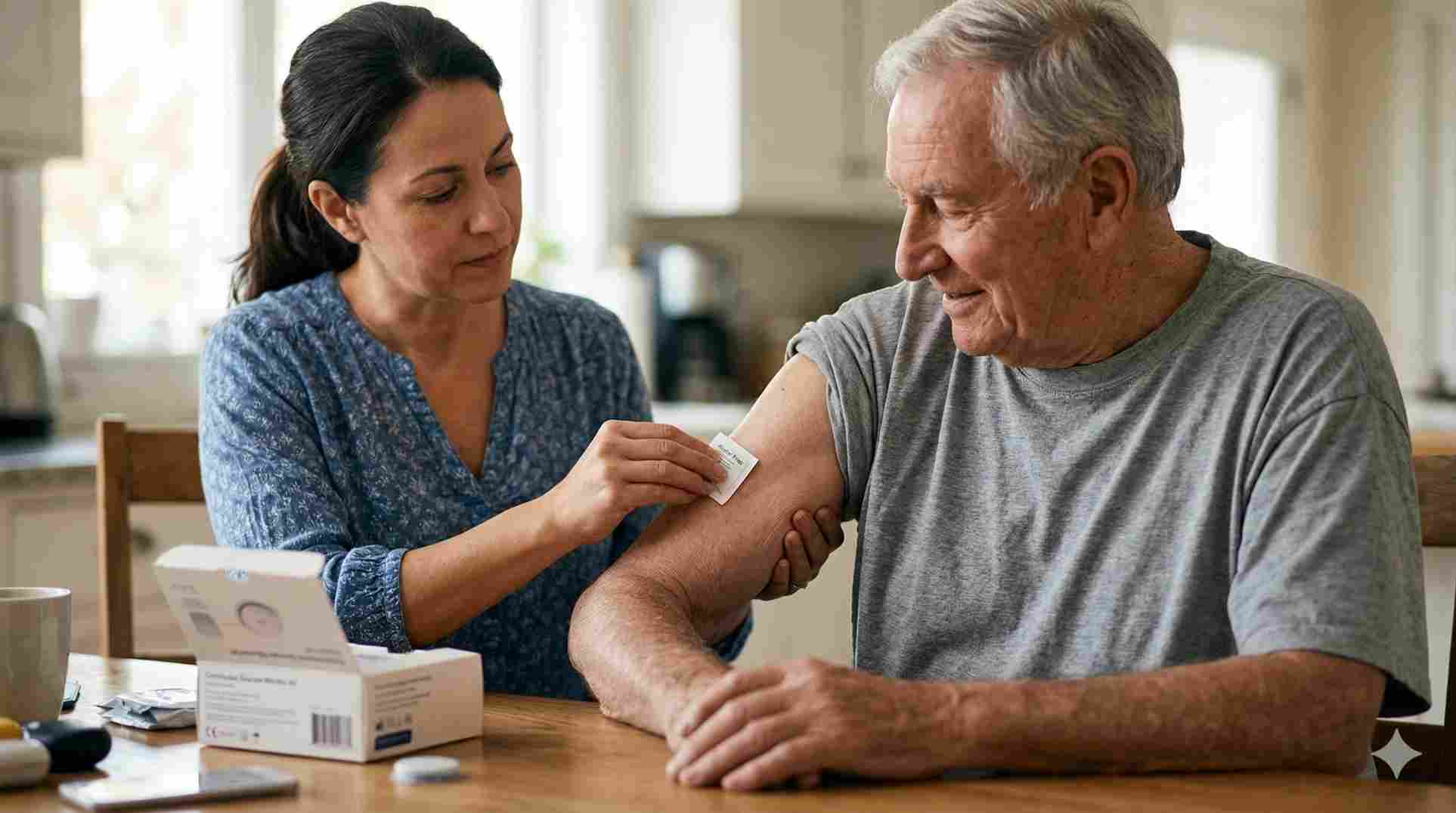
Step 1: Wash Your Arm Right
A loose sensor gives bad data. If it wiggles, it fails. Wash your arm with plain, boring soap. Skip the fancy moisturizing body washes—they leave a slippery film. Hit the spot with an alcohol swab and let it dry completely before you apply the device.
Step 2: Stick to the Arm
The back of the upper arm is the only approved spot for a reason. It has the exact right mix of fluid and fat. Putting it on your stomach or leg will totally wreck the accuracy of freestyle libre data.
 The Cost Factor
Good equipment costs money. Here is how insurance looks at it.
| Insurance Type | Coverage Criteria | Pros | Cons |
|---|---|---|---|
| Medicare Part B | Must use insulin, or have a history of severe hypoglycemia. | Covers 80% of the cost of sensors and the reader. | Strict paperwork required from your doctor every 6 months. |
| Private Insurance | Varies by plan. Often requires Prior Authorization. | May cover the newer Libre 3 system faster than Medicare. | High deductibles mean you might pay full price early in the year. |
| Cash Pay | None. | Immediate access. No doctor paperwork needed for insurance approval. | Can cost roughly $130 to $160 per month at the pharmacy. |
The Mental Toll
Constantly staring at data will burn you out. A sensor is just a tool, not a report card on how you are living your life. A reading of 105 on your finger and 115 on your arm both mean the exact same thing: you are safe. Look at the arrows. The direction your sugar is moving matters way more than the exact down-to-the-decimal number.
 Final Thoughts
Living with diabetes takes grit. The tools you use should make your life easier, not harder. Once you know the difference between blood and fluid, stop squeezing the sensor in your sleep, and understand the true accuracy of freestyle libre, you can finally trust the data on your screen. Stop second-guessing every beep and start getting some sleep.
Tired of Sore Fingers and 3 AM Blood Sugar Panic?
Relying on old-school fingersticks means you only get a tiny snapshot of your health, leaving you completely blind to the rapid drops and spikes that happen in between tests. It is exhausting.
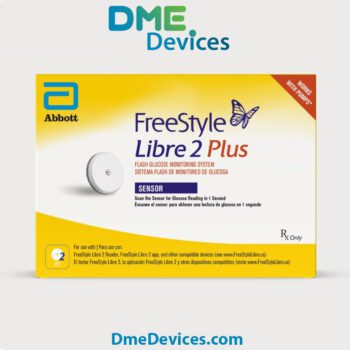
But here is the reality: you do not have to live tied to a test strip anymore. By switching to continuous glucose management, you get minute-by-minute data sent straight to your phone. With a sensor smaller than two stacked pennies, you can finally see exactly where your numbers are trending before a dangerous low even hits. Stop guessing, ditch the daily pricks, and take your sleep back.


Why does my Libre read "LO" but I feel fine?
Do not panic. Do a fingerstick. If your blood is normal, you probably just laid on the sensor while watching TV and pushed the fluid away.
Should I care more about the arrows or the numbers?
The arrows. The arrows tell you what is about to happen next, so you can eat a snack before a bad low actually hits.
Will swimming ruin the sensor?
No, they are water-resistant. But staying in a hot tub too long softens the glue. If the glue lifts, the sensor wiggles, and the numbers go bad.
Can I calibrate it myself?
No. They are factory calibrated. You cannot type in a blood number to “fix” it.
What if my sensor is off by 40 points all day?
If you waited out the first 24 hours, you drank water, and it is still completely wrong, the sensor is likely a dud. Call Abbott. They usually mail you a free replacement fast.



Write a comment
Your email address will not be published. All fields are required